



Newly Added Products
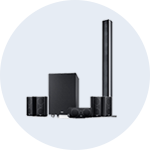
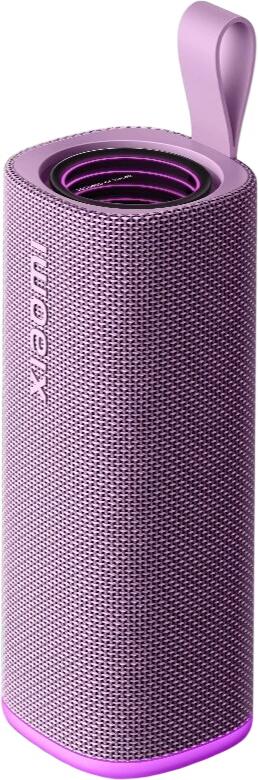
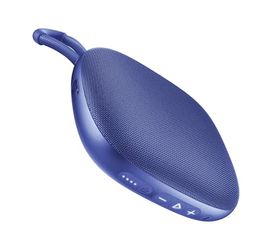
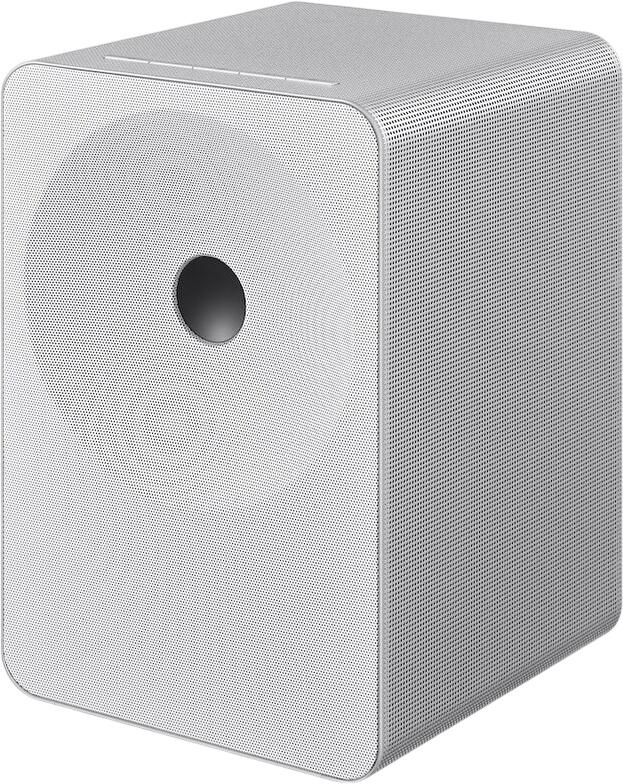
Portable speakers: Consumer tips
How do portable speakers work?
Portable speakers are active speaker systems with an integrated amplifier and Bluetooth connectivity, receiving audio signals wirelessly from smartphones, tablets, laptops or other compatible sources and converting them into sound waves. Unlike passive hi-fi speakers, which require an external amplifier, all the necessary components are built into a single enclosure, reducing set-up to little more than switching the unit on and pairing it. Compared with Wi-Fi speakers, Bluetooth models offer universal compatibility: they work with virtually any smartphone regardless of operating system or network configuration. Wi-Fi speakers, by contrast, generally require specific ecosystems or network set-ups. The key difference compared with wired active speakers lies in placement flexibility. Without a cable connection, the speaker can be positioned anywhere that mains power or a charged battery is available. Bluetooth speakers can be broadly divided into two main categories: portable, battery-powered models for use on the move and more stationary, mains-powered home speakers. Portable models prioritise mobility, water resistance and battery life, while stationary models can offer more power, better sound quality and more extensive features thanks to their permanent power supply. Many models, however, can operate both on battery power and from the mains, making them especially flexible for use both at home and on the go.
What designs and sizes are available in portable speakers?
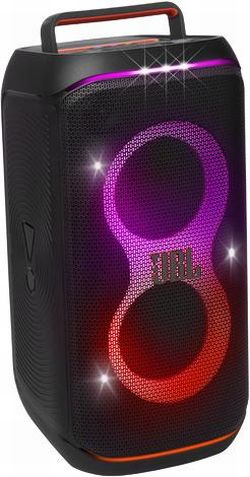
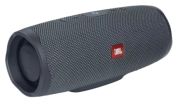
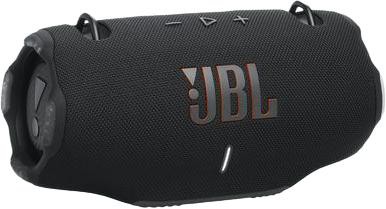
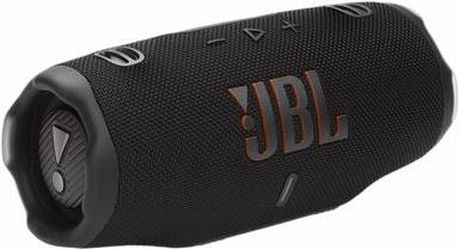
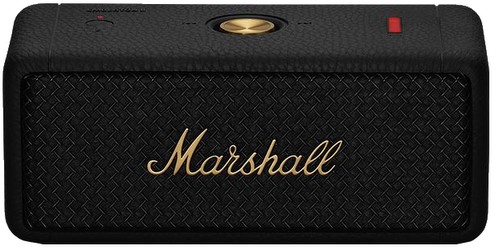
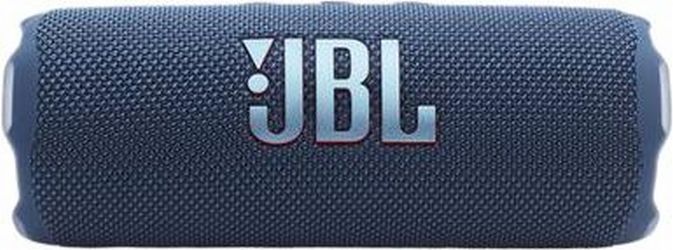
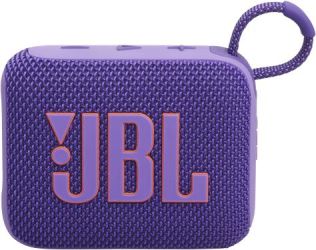
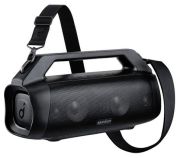
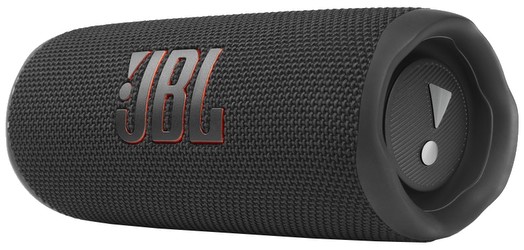
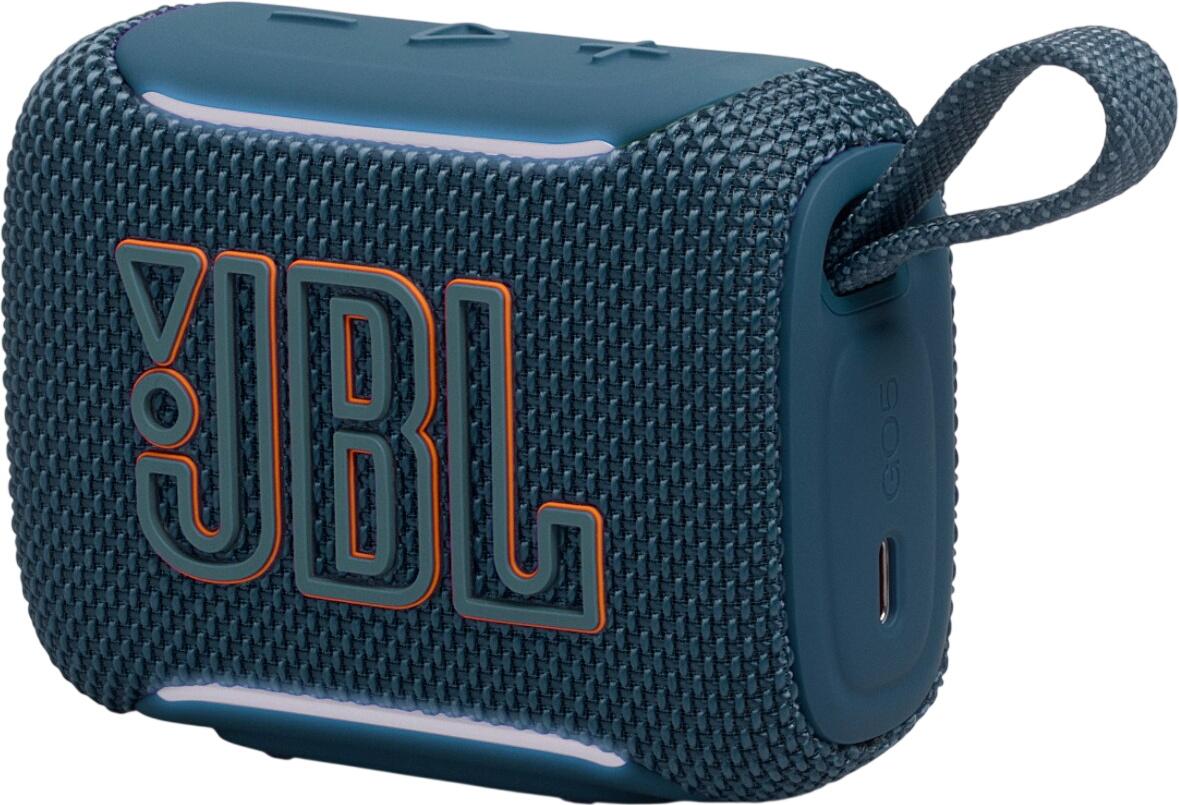
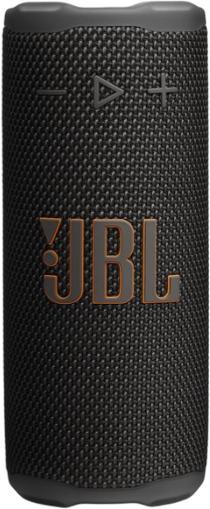
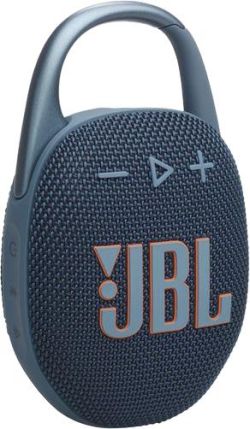
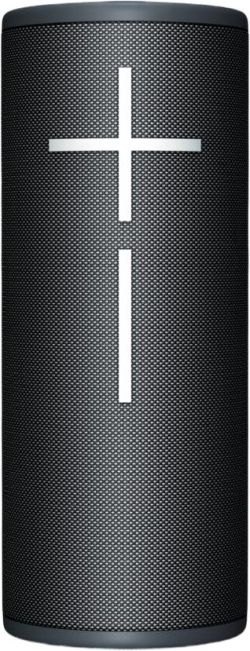
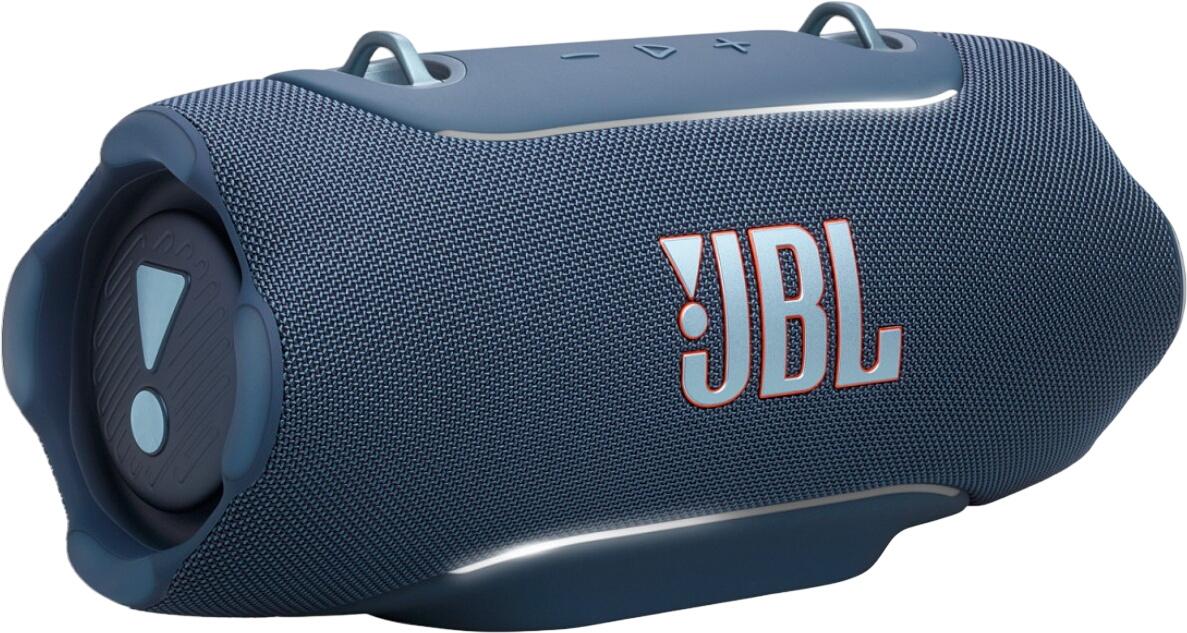
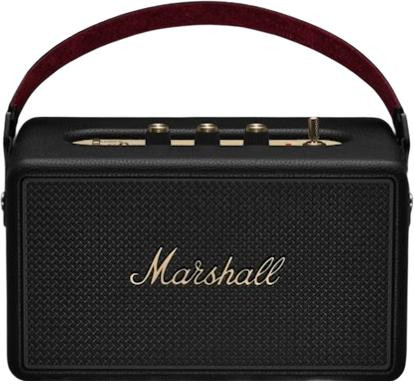
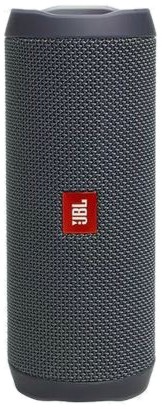
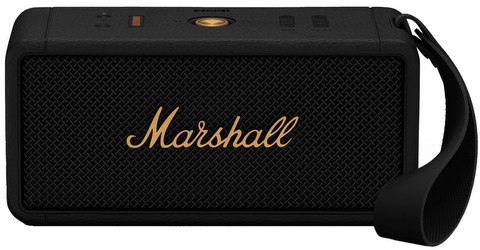
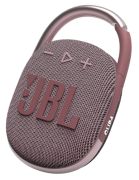
Portable speakers are available in a range of form factors, with size directly affecting both sound quality and portability. Ultra-compact mini speakers weighing under 500 grams, such as the JBL Clip or Bose SoundLink Micro, are designed for maximum portability and can fit into a jacket pocket or be attached to a rucksack using an integrated carabiner clip. These models offer fundamentally solid sound for short-range listening, but quickly reach their limits in terms of bass and volume. Mid-sized cylindrical speakers weighing between 500 grams and 1 kilogram, such as the JBL Charge or UE Boom, are the best-selling category and offer a well-balanced compromise between portability and sound quality. The 360-degree sound dispersion of the cylindrical design allows for more even coverage in all directions, making these speakers ideal for outdoor use. Large party speakers weighing more than 2 kilograms, such as the JBL Boombox or larger Marshall models, are designed for maximum sound pressure and bass performance, but are no longer truly portable and are better described as transportable rather than genuinely easy to carry. In this category, sturdy carrying handles or shoulder straps are typical features.
Water resistance and protection ratings
Weather resistance is one of the most important purchasing criteria for portable speakers, as outdoor use, sport, occasional rain showers and trips to the beach all require robust protection. The standardised IP protection system (Ingress Protection) uses two digits to indicate protection against foreign bodies and water, with the second digit being particularly relevant for water resistance in speakers. IP67-certified speakers are fully dustproof and can withstand immersion in water up to 1 metre deep for 30 minutes, which is sufficient for rain showers or brief submersion. This rating is standard among many mid-sized speakers and provides adequate protection for most everyday situations. IP68 offers even stronger protection, including longer immersion at greater depths. This rating is becoming increasingly common in outdoor-focused models and is ideal for watersports users or particularly wet environments. IPX5 protects against jets of water from any direction and is sufficient for sweat, rain and splashes, but does not protect against full immersion. It is important to note that IP ratings apply to new devices and can become less reliable over time as a result of wear, damaged seals or pressure-related stress.
Bluetooth and codecs
Bluetooth is at the core of every Bluetooth speaker and has a major influence on connection stability, sound quality and feature set, with newer versions bringing noticeable improvements in everyday use. Bluetooth 5.0 should now be regarded as the minimum standard and offers clearly improved connection stability, greater range — theoretically up to 40 metres — and lower power consumption compared with older versions. Bluetooth 5.2 and 5.3 bring further improvements in energy efficiency and enable the newer LE Audio standard with the LC3 codec, which is expected to replace SBC as the baseline standard over time and deliver better quality at lower power consumption. The supported audio codecs determine how much of the original sound quality is preserved during wireless transmission.
Battery life and charging technologies
Mini speakers usually offer around 6 to 10 hours of playback due to their limited battery capacities, which is sufficient for short outings or day trips but can be restrictive on multi-day camping trips. Mid-sized speakers typically provide 12 to 20 hours of battery life, while models such as the JBL Charge can also function as a power bank for smartphones thanks to their larger batteries. Speakers such as the UE Hyperboom or JBL Boombox can reach 24 hours or more, making multi-day travel without access to a socket possible. It is important to bear in mind that manufacturers’ figures are usually measured at moderate volume levels and without additional features enabled: at maximum volume or with light shows activated, actual battery life can be 30 to 50 per cent lower than stated. USB-C is the current charging standard and enables fast charging with ordinary smartphone chargers, while Power Delivery may be used for quicker charging where supported. On some models, fast-charging functions can provide several hours of playback after just 15 to 20 minutes of charging, which is especially useful if charging was forgotten in advance. Wireless charging via the Qi standard is available on some models, although it offers slower charging times than wired charging.
How does sound quality differ between models?
Sound quality is both the most subjective and the most important purchasing criterion for most speakers, with the physical limitations of small enclosures forcing compromises and manufacturers setting different priorities. As a general rule, larger speakers sound better when based on similar technology, because greater driver volume, larger passive radiators and more cabinet volume allow for deeper bass and higher output levels. Mini speakers weighing up to 300 grams tend to produce a thin, bass-light sound that is adequate for background listening but struggles with bass-heavy music or high volumes. Sound quality at higher volume levels can also differ substantially between models. Cheaper products often compress and distort significantly at maximum output, whereas a good portable speaker remains clean and controlled even near its performance limits. Bass controls or EQ functions via apps allow users to tailor the sound on many models. Stereo pairing of two speakers can dramatically improve spatial presentation and is worth considering for regular use at home.