







Newly Added Products
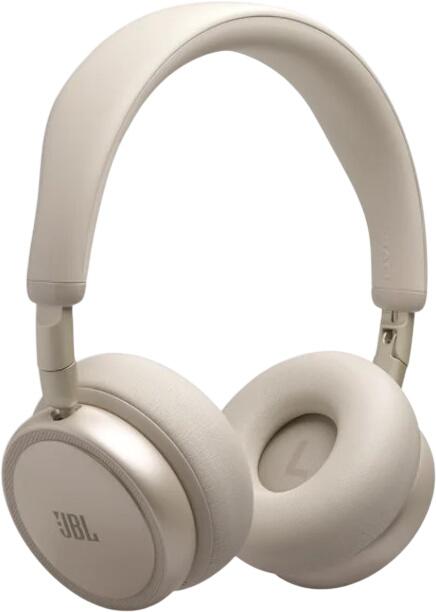
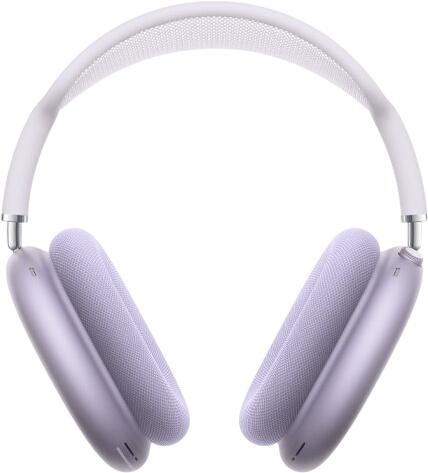
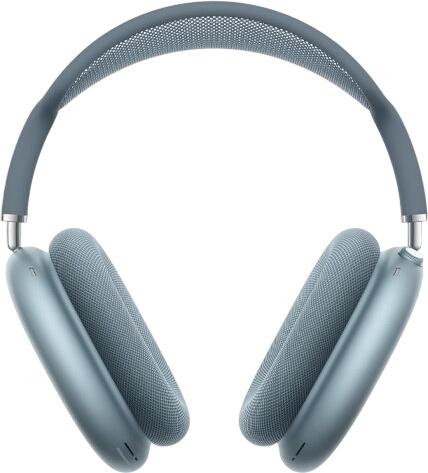
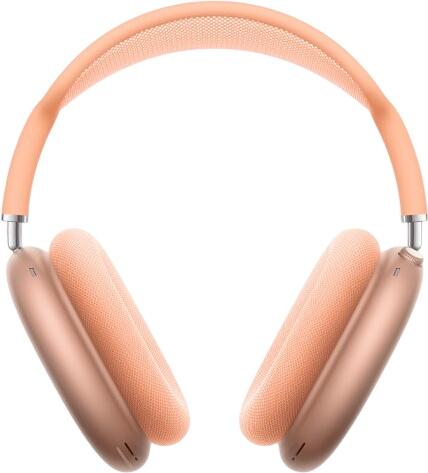



Headphones with a headband: Consumer tips
How do headband headphones work and what driver technologies are available?
Headband headphones convert electrical signals into sound waves through various driver technologies, allowing for larger and more powerful transducers than compact in-ear models. Dynamic drivers are the most common technology and use a diaphragm connected to the signal coil that moves within a magnetic field, causing air molecules to vibrate. This proven technique provides strong bass, natural mids, and can achieve very high sound levels, with driver diameters ranging from 30mm to 70mm or more. Larger drivers can reproduce deeper frequencies and offer better dynamics, but require more space in the ear cups. Planar magnetic drivers use a flat, large-area diaphragm with embedded conductors between two magnetic fields, resulting in particularly precise and low-distortion reproduction with excellent spatial representation. This technology is usually found in high-end headphones and requires more amplifier power.
Over-Ear or On-Ear?
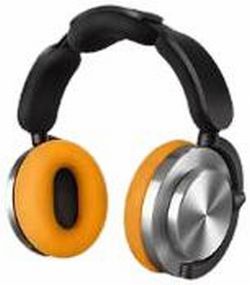
The choice between over-ear and on-ear headphones significantly affects comfort, sound characteristics, and usability. Over-ear headphones completely enclose the ear with large ear cushions, creating an isolated acoustic environment that enhances bass reproduction and effective noise isolation. This design allows for larger drivers and housing volumes, achieving impressive dynamics and spatial representation. Comfort is also pleasant over hours with high-quality models, as the weight is distributed across the headband and ear cushions without exerting pressure on the ears. Disadvantages include the higher weight, larger dimensions, and stronger thermal insulation, which can lead to sweaty ears during prolonged use.
On-ear headphones are more compact and lighter, as the ear cushions rest directly on the ears instead of enclosing them. This makes them more portable and less conspicuous when used on the go, while the reduced isolation allows for greater situational awareness. The bass reproduction is weaker due to the less enclosed system, while the risk of sound leakage to the outside is higher. The clamping pressure can become uncomfortable during prolonged use, as the cushions must press against the ears to achieve an acceptable seal. For critical music listening, gaming, or long studio sessions, over-ear headphones are usually the better choice, while on-ear models are more practical for mobile use, sports, or situations requiring environmental awareness.
Open, closed, or semi-open design – What does this mean for sound?
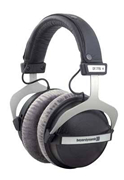
The acoustic design of the ear cups has a fundamental impact on the sound characteristics and usability of headband headphones, significantly determining sound propagation and isolation. Closed headphones feature completely sealed ear cups with no openings to the outside world, providing maximum isolation both inwards and outwards. This design allows for powerful bass reproduction due to the closed air volume and effectively isolates against external noise. They are ideal for loud environments, public transport, recording studios, or anywhere others should not be disturbed. Disadvantages may include a less natural sound due to internal reflections and a "closed" listening experience, while thermal insulation can become problematic during prolonged use.
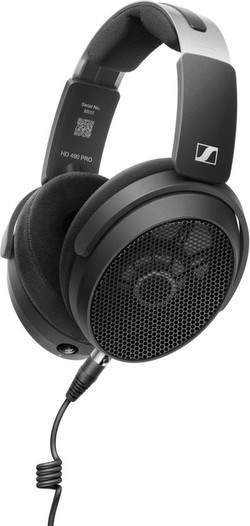
Open headphones have perforated or grille-like backs of the ear cups, allowing air and sound to circulate freely. This creates a more natural, spacious sound with better stage representation and fewer resonances, as no closed air volume is formed. The open design prevents heat build-up and allows for more comfortable longer listening sessions. However, sound is lost both inwards and outwards, making them only sensible in quiet environments. The bass is usually less powerful than in closed models. Semi-open headphones attempt to combine the advantages of both designs through partial openings or special acoustic designs. They offer more natural sound than closed models but better isolation than fully open variants. For home use and critical listening, open headphones are often superior, while closed models are more practical for on-the-go or communal spaces.
Wired or wireless?
The decision between wired and wireless headband headphones significantly affects both sound quality and usability, with both technologies having their specific strengths and weaknesses. Wired headphones offer several advantages. The analogue signal transmission is lossless and latency-free, making them the first choice for enjoyable music listening and in the studio. They do not require batteries, can theoretically be used indefinitely, and are often cheaper than comparable wireless models. Audiophile headphones are practically exclusively wired, as any digital processing means potential sound losses. Replaceable cables allow for repairs and upgrades, and various connectors (3.5mm, 6.35mm, XLR) provide flexibility for different devices. Disadvantages include limited freedom of movement, cable clutter, and the risk of cable breaks, especially during mobile use.
Wireless headband headphones have made enormous progress in recent years and now offer surprisingly good sound quality through modern Bluetooth codecs like aptX HD, LDAC, or LHDC. Freedom of movement is unrestricted, cable clutter is a thing of the past, and many models offer practical features like automatic pausing when removed or touch controls. Active noise cancelling works optimally only with wireless or active models. Disadvantages remain battery life, potential latency when gaming or watching videos, and possible connection drops. Sound quality reaches nearly wired levels in high-quality models but comes at a higher cost. For home use and audiophile demands, wired headphones remain superior, while for sports, commuting, or general mobility, wireless models are more practical.
How does active noise cancelling work and what differences are there?
The basic principle uses external microphones that capture ambient noise and generate anti-phase sound waves through the headphone drivers, which cancel out the disturbing noises. ANC is particularly effective against constant, low-frequency sounds like airplane or air conditioning noise, while irregular or high-frequency sounds can be less effectively suppressed. Feed-Forward ANC uses microphones outside the ear cups and can capture sounds before they reach the ear, allowing for proactive suppression. Feed-Back ANC uses microphones inside the ear cups and reacts to sounds actually arriving at the ear, which is more precise but also more reactive. Hybrid ANC combines both approaches, achieving the best performance across a wide frequency spectrum. Adaptive ANC automatically adjusts the suppression strength to the environment and can offer different modes for various situations: complete suppression for focused work, transparency mode for situational awareness, or wind suppression for outdoor use. The quality of ANC varies between manufacturers and price ranges. Premium models from Sony, Bose, or Sennheiser achieve 85-95% noise reduction, while budget ANC often only achieves 50-70% and can sometimes be more disruptive than helpful. It is important to note that ANC reduces battery life and can cause feelings of pressure or nausea in some users. The best headphones with ANC are practically inaudible in operation and do not produce artificial artifacts or noise.
For which applications are different types of headphones suitable?
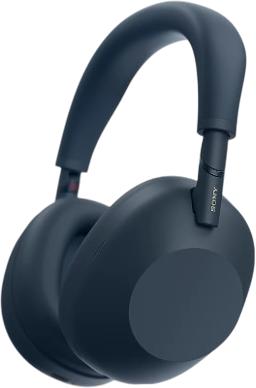
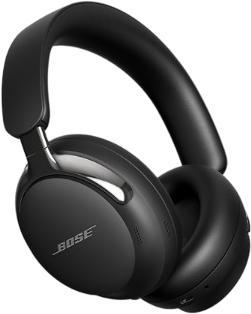
Hi-Fi and audiophile headphones prioritise absolute sound quality and neutral reproduction for critical music listening, with open designs, high-quality drivers, and wired connections being standard. These models from Sennheiser, Focal, or HiFiMan can cost several thousand pounds, require a headphone amplifier, and are suitable only for quiet listening environments. Headphones for studio monitoring, such as the Sony MDR-7506 or Audio-Technica ATH-M50x, provide analytical, uncoloured reproduction for music production, mixing, and mastering, with closed designs ensuring isolation for recording situations. Gaming headphones focus on spatial positioning, comfortable long-term wear, and often integrated microphones, with models like the SteelSeries Arctis or HyperX Cloud optimised for hours of gaming sessions. Closed designs prevent disturbance to teammates, while special tunings emphasise footsteps or gunshots. Headphones like the Sony WH-1000XM5 or Bose QuietComfort combine excellent ANC with wireless functionality and long-lasting batteries for on-the-go use. Foldable designs and carrying cases enhance mobility. Sports and fitness headphones require sweat-resistant materials, secure fit, and usually wireless connection, with on-ear designs often being more practical than heavy over-ear models. DJ headphones like the Pioneer HDJ-X10 offer high sound levels, strong bass, and robust construction for club environments, often with swivelling ear cups for one-sided monitoring.
What should you consider when buying headband headphones?
For home use, open, wired models are often optimal, while for on-the-go, closed, wireless headphones with ANC are more practical. Impedance provides insight into the required amplification needs: low-impedance headphones (under 100 Ohms) work well with smartphones and laptops, while high-impedance models (300+ Ohms) may require dedicated headphone amplifiers. The sound tuning should match musical taste: bass emphasis for electronic music, neutral tuning for classical music, or analytical tunings for studio work. Comfort must be tested individually, as head shape and personal preferences can vary greatly. For wireless models, battery life, charging time, and supported codecs are important factors, while ANC quality can only be assessed through direct testing. Build quality is reflected in sturdy materials, precise adjustment mechanisms, and replaceable wear parts. Available accessories like alternative cables, cushions, or carrying cases can influence long-term value.
Are headband headphones better for sound than in-ear headphones?
Over-ear headband headphones provide better sound quality and bass reproduction, as they have larger drivers and completely enclose the ear.
Are headband headphones comfortable for extended use?
They are comfortable due to padded headbands and ear cups, but comfort can vary individually.
Are headband headphones always wired?
No, there are both wired and wireless (Bluetooth) headband headphones. Wireless models offer more freedom of movement.
Can I use headband headphones for sports?
There are special sport models with headbands that are particularly lightweight and non-slip. Standard models may be less suitable for heavy sweating or intense movement.