









Dog collar: Consumer tips
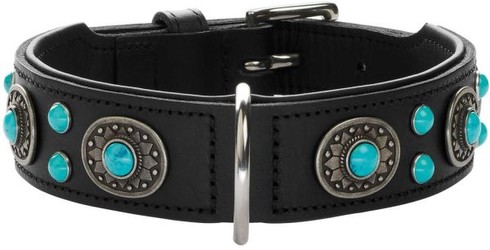
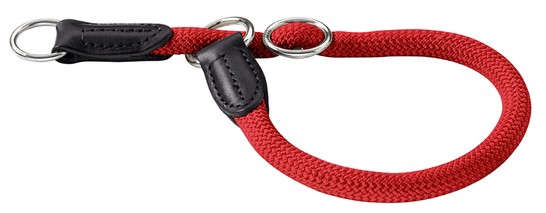
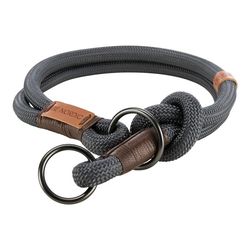
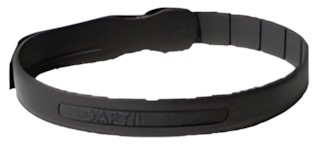
A dog collar is a basic accessory for dogs that serves both practical and decorative functions. From simple nylon collars to special training collars and luxurious designer models made of leather or adorned with decorative elements, the range is so vast that there is something for every taste. Comfort, safety, and durability should therefore be particularly considered when making a selection. Special functional collars are designed for specific purposes or problems. Slip collars, also known as choke collars, tighten when pulled and are mainly used for training, but should only be used under expert guidance. Training collars with vibration or sound can assist in behaviour correction, while reflective collars or those with LED lighting increase visibility in the dark, thus contributing to safety.
Not only beautiful but also informative
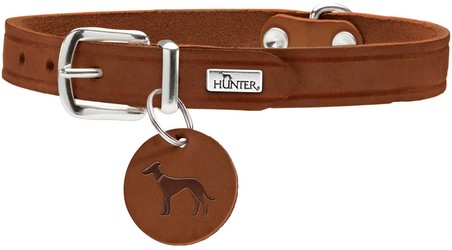
In addition to its practical function, the collar also serves as a carrier for important information. Address tags, vaccination tags, or tax tags can be attached to a D-ring or a special tag loop, which allows for quick identification and return of the dog in case of escape. Some available collars even feature integrated GPS trackers or QR codes that lead directly to the owner's contact details.
How wide should a collar be?
The width of the collar is adjusted to the size and breed of the dog. For small dogs, narrow collars with a width of 1-2 cm are suitable, while medium-sized dogs should wear collars with a width of 2-3 cm. For large and strong dogs, wider collars of 3-5 cm are recommended, as they distribute pressure better and provide more control over the dog. The length of the collar should be chosen so that it fits snugly enough to prevent slipping over the dog's head, but allows enough room for the dog to breathe and swallow comfortably. As a rule of thumb, there should be space for one to two fingers between the collar and the dog's neck.
Material
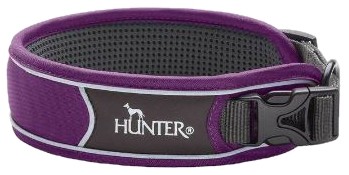
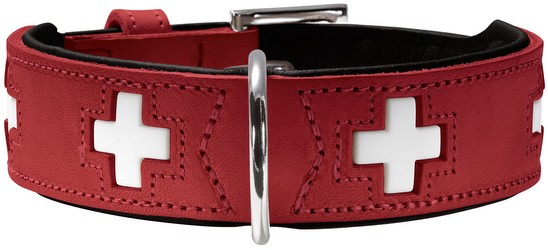
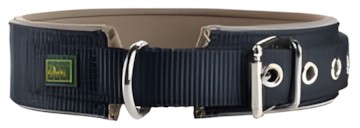
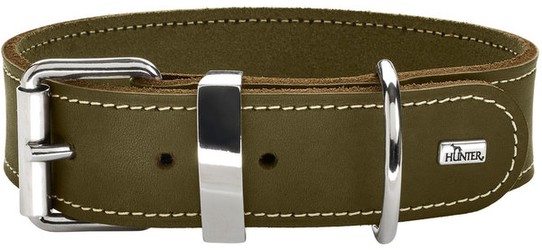
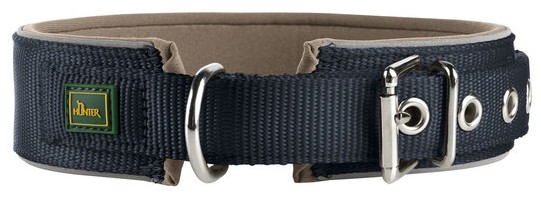
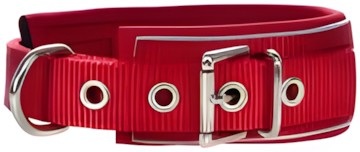
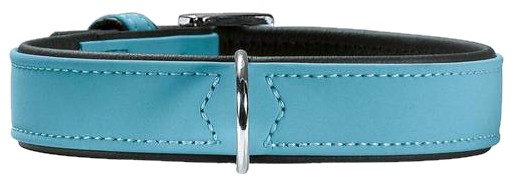
Dog collars are made from various materials, each with different properties depending on their intended use. Nylon collars are particularly robust, easy to care for, and available in numerous colours and patterns. They are well-suited for everyday use and are easy to clean even after frequent contact with water or dirt. Leather collars are characterised by their durability and natural adaptability. Over time, they become softer with wear and adapt optimally to the shape of the dog's neck, but require regular care to maintain their quality. For dogs with sensitive skin or allergies, there are special collars made from hypoallergenic materials like Biothane or with soft padding at contact points.
Closure: Buckle or Click?
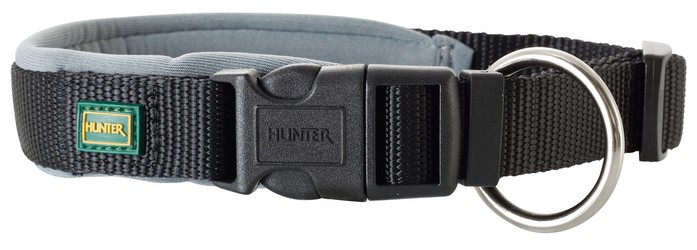
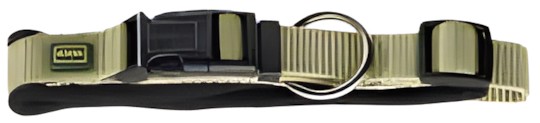
Closure systems for dog collars come in various designs, which can be selected based on safety needs and handling. Buckle closures are classic, particularly secure, and durable, but require a bit more time to put on and take off. Plastic click closures allow for quick and easy putting on and taking off, but may break under very strong dogs or extreme strain. Safety closures automatically open under excessive pull, which is especially important for dogs that like to climb or brush through undergrowth, as this prevents them from getting caught.
Care
Caring for the dog collar is important for its longevity and the health of the dog. Nylon collars can usually be washed in the washing machine or by hand, while leather collars should be treated regularly with special leather care products. It is advisable to regularly check the collar for signs of wear and replace it if necessary to ensure the safety of the dog and the owner.