






















Cat scratching tree & cave: Consumer tips

Why cats need scratching and hiding spaces
Scratching is a normal and necessary part of cat behaviour. It helps cats to:
- remove the dead outer layer of the claws
- stretch their muscles and shoulders
- leave scent marks from their paws
- release tension and reduce stress
- define their territory
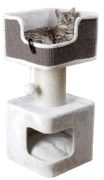
Height matters too. Cats often feel safer when they can observe a room from above, and many also want somewhere enclosed where they can rest undisturbed. That is why cat trees with platforms, hideaways and scratching surfaces are usually more useful than a basic post on its own.
Large or small: which cat tree is right?
The right size depends on your cat, your home and how the furniture will be used.
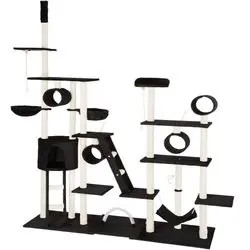
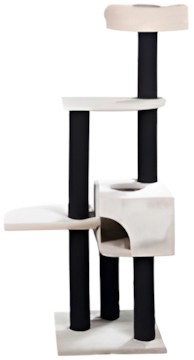
Large floor-standing cat trees
These are ideal for:
- active cats that enjoy climbing
- indoor cats needing more stimulation
- larger breeds
- multi-cat households
- owners who want one main cat activity station
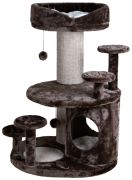
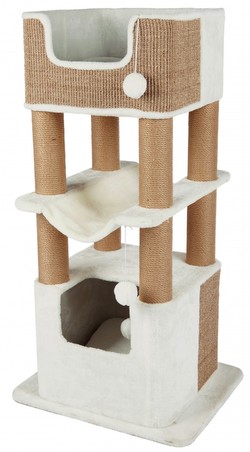
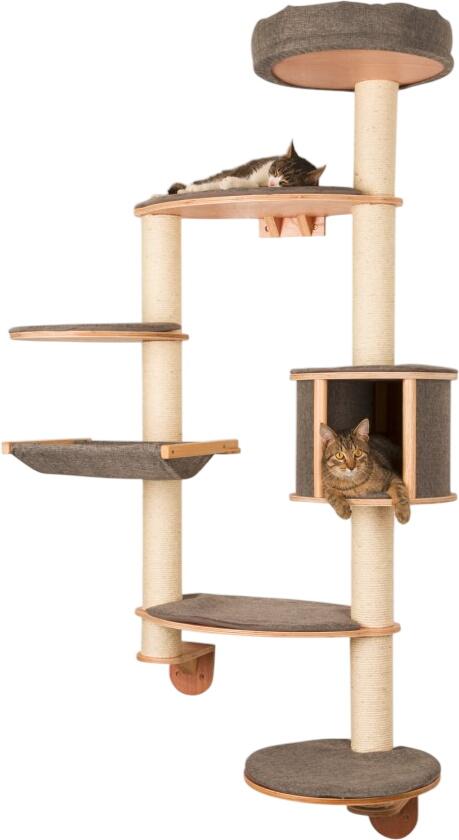
Taller cat trees often include:
- multiple levels
- platforms
- hidey holes or caves
- scratching posts
- hammocks or beds
- toys or dangling extras
They offer the most variety, but they do take up more room and become a more visible part of the home.
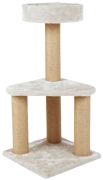
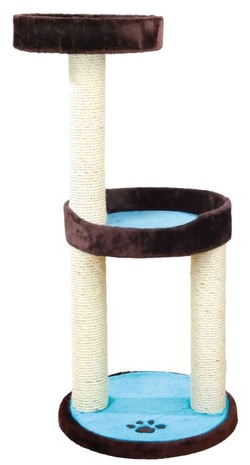
Compact cat trees and scratching posts
Smaller models work well for:
- one-cat homes
- smaller rooms
- flats
- use as a secondary scratching area
- older or less agile cats
These can still be very useful, especially if placed well and matched to the cat’s habits.
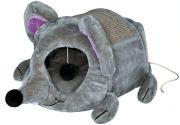
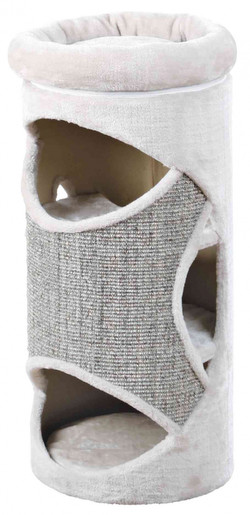
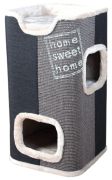
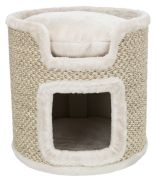
Cat caves and enclosed hideaways
Standalone cat caves or cat-tree models with enclosed sections are especially useful for:
- shy cats
- older cats
- cats that like sleeping in covered spaces
- homes with children, dogs or frequent activity
Think about age and mobility
Not every cat wants the tallest model available.
- Kittens do better with lower, safer designs while coordination develops
- Adult cats often benefit from taller, more active climbing structures
- Older cats usually appreciate easier access, lower jumps and softer resting spots
If you have a senior cat, look for platforms that are easy to reach rather than only focusing on overall height.
Where should a cat tree go?
Placement has a big effect on whether a cat actually uses it. A good location is usually:
- near a window
- in a room where the cat already spends time
- away from constant disturbance
- clear of awkward obstacles around the base
A window position often works well because cats enjoy watching outside activity. At the same time, if the cat tree is tucked away in an unused part of the home, it may be ignored.
In multi-cat households, it is often better to combine one main cat tree with additional scratching options elsewhere in the home rather than expecting one piece of furniture to do everything.
Materials: what to look for
Sisal
Sisal remains the most common and practical scratching material. It is durable, coarse enough for claw use and widely accepted by cats.
Plush and soft coverings
These are often popular for sleeping platforms and beds because they feel warm and comfortable. They are best when the covers are reasonably easy to clean.
MDF, chipboard and solid wood
Many cat trees use MDF or chipboard for the main structure, while more premium options may use solid wood.
- MDF/chipboard: common and affordable
- solid wood: usually more durable and sturdier, but more expensive
Whichever material is used, the build should feel stable and well finished rather than flimsy.
Useful features to consider
A good cat tree may include:
- scratching posts wrapped in sisal
- multiple resting platforms
- enclosed caves
- hammocks
- removable cushions
- hanging toys
- wide beds for larger cats
Not every extra is essential, but a mix of scratching, climbing and resting features usually gives the best value.
Stability is crucial
A cat tree should feel secure even when the cat jumps, climbs or scratches enthusiastically. This is especially important with taller models.
Look for:
- a wide, heavy base
- solid fixings
- sturdy posts
- clear weight guidance
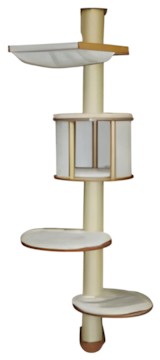
- the option for wall attachment on taller designs
As a rule, the taller the cat tree, the more important the base and overall build quality become. In homes with larger cats or several cats, this matters even more.
After assembly, it is worth checking all fittings properly and rechecking them from time to time, as repeated use can loosen connections.
Buying for larger cats or several cats
If you have a large breed or more than one cat, check the dimensions carefully. Resting spots that look generous in product photos can be much smaller in reality.
Before buying, check:
- overall height
- base size
- bed and platform width
- maximum weight guidance
- post thickness
- whether the structure is suitable for one cat or several