








Buying bicycle bags: Tips for consumers
Bicycle bags offer cyclists a practical way to transport luggage and equipment safely and protected from the weather. They are available in various sizes, materials, and designs. When choosing the right bicycle bag, factors such as the intended use, attachment type, and capacity should be considered. Below, we explain some important aspects to keep in mind when searching for the ideal bicycle bag.
What is a bicycle bag?
Bicycle bags enable the transport of equipment, tools, spare clothes, and much more needed for the daily commute, family outings on weekends, or multi-day or even multi-week cycling tours. They are made from robust materials that are water-repellent or even waterproof, ensuring that the equipment is protected from dirt and remains dry even in the rain. Depending on the intended use, there is a wide selection of bicycle bags with different volumes, so there is enough storage space for every need. Typically, they are attached to the bicycle frame, the luggage rack, the fork, the handlebars, or the saddle. Various attachment systems are available, ranging from simple Velcro straps to elaborate click mechanisms. In recent years, bikepacking has become a real trend, referring to short cycling tours with relatively light luggage. Manufacturers have responded to this trend by offering a wide range of particularly lightweight bags for gravel bikes. The longer one is on the bike, the more equipment needs to be transported. Then multiple bicycle bags are necessary, and a small saddlebag is no longer sufficient.
What types of bicycle bags are there?
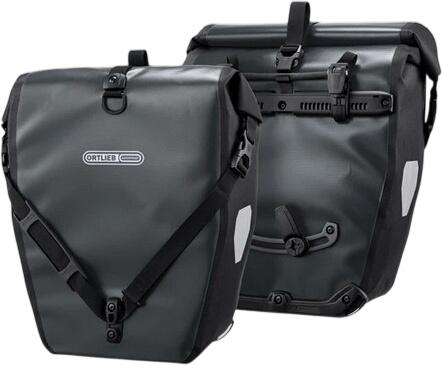
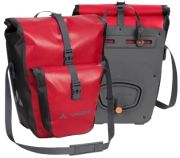
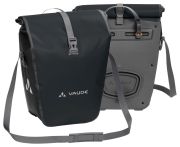
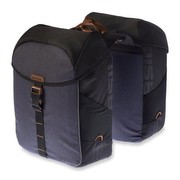
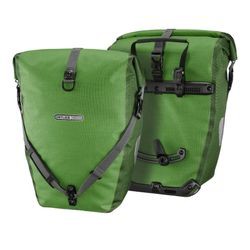
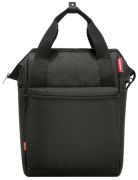
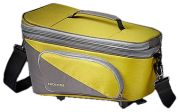
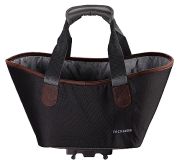
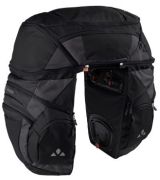
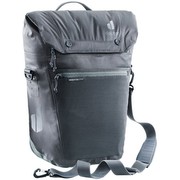
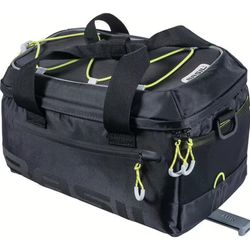
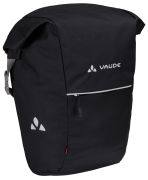
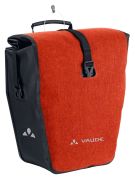
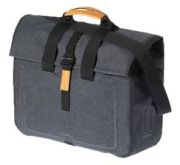
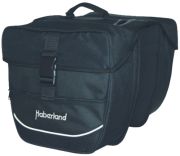
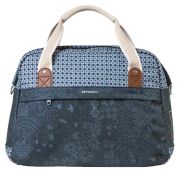
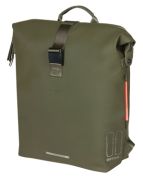
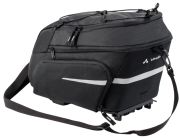
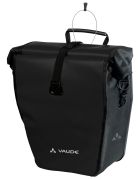
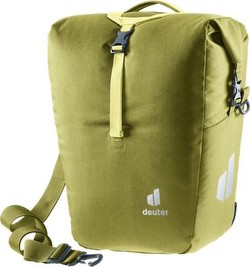
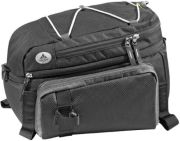
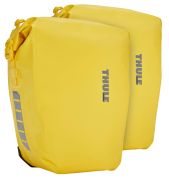
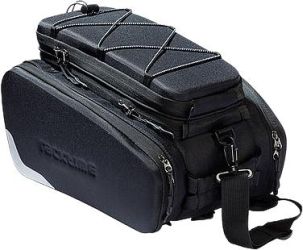
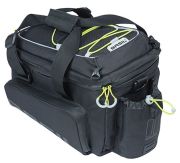
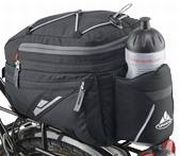
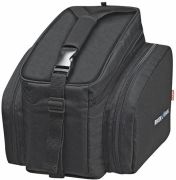
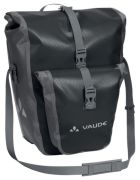
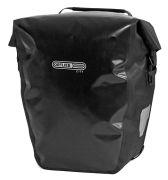
- Luggage rack bags are available as a pair or individually and offer the largest storage capacity. They are particularly suitable for longer cycling trips. Thanks to their large volume, food, tents, and sleeping bags can be transported well. They are attached to the sides of the luggage rack. For the commute to work, where spare clothes for the office and a laptop need to be carried, single bags are very popular. Particularly practical are luggage rack bags with shoulder straps that can be used as a backpack or work bag. This allows for flexible transport of the contents and ensures they are always secure.
- Front bags are mainly used for longer cycling trips. They are mounted directly on the front luggage rack or come with their own attachment system. Front bags are always sold as a set, as even weight distribution on both sides of the bicycle is especially important with a larger load.
- Fork bags are particularly popular in the bikepacking scene. They are slightly smaller and lighter and are attached directly to the bicycle fork using a fork luggage rack. This requires appropriate attachment points on the bicycle fork.
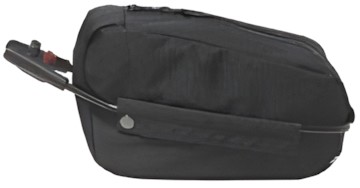
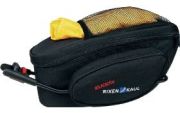
- Saddle bags are ideal for short trips or road cyclists who need a lightweight and discreet bag. Saddle bags are attached to the struts directly under the saddle and provide space for smaller items such as a multitool, repair kit, spare tube, or personal valuables. They are lightweight, discreet, and do not interfere with riding.
- Seat post bags are particularly interesting when there is no luggage rack on the bicycle, as is the case with mountain bikes or racing bikes, and a small saddle bag does not provide enough volume. They offer not only more space for equipment but can also be loaded with more weight due to the stable attachment to the seat post.
- Frame bags are attached directly to the bicycle frame with Velcro straps. They come in elongated shapes as top tube bags, which are mounted over or under the top tube, and as triangle bags, which usually offer a bit more storage space and often fill the entire triangle of a diamond frame.
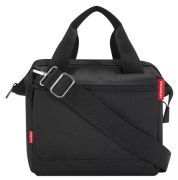
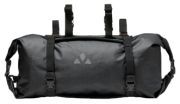
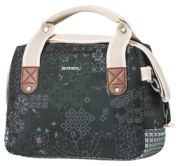
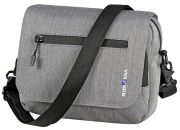
- Handlebar bags have the great advantage that one can quickly access the contents without having to dismount. Typically, the handlebar bag is attached to the handlebars with a click system, allowing it to be easily removed when leaving the bicycle. The lid often features a transparent map pocket, which facilitates navigation and protects the map from moisture.
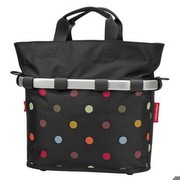
- Bicycle baskets are suitable for shopping and daily necessities. Their open design allows for quick and easy access, but they do not protect the contents from dirt and moisture. They are attached to the handlebars or the luggage rack. Bicycle baskets for smaller dogs are ideal if the four-legged friend should always be there but cannot manage every distance alone. Dog bicycle baskets are usually equipped with a protective grid and are often made of wicker.
How much volume do I need for my bicycle bag?
How large the volume of a bicycle bag should be or whether more than one bicycle bag is needed depends heavily on the type and length of the cycling tour as well as the attachment options on the bicycle. For day trips or the daily commute, a small bicycle bag with a volume of 10 to 20 litres is sufficient, providing space for provisions, spare clothes, and some documents. For multi-day tours, more storage space is needed for additional clothing, provisions, cooking utensils, tent, and sleeping bag. With 20 to 40 litres, one is on the right track and still has space for a larger first aid kit, which should not be missing on any cycling tour. For long-distance travel or extensive cycling tours, a larger volume of 40 to 60 litres is recommended. Typically, multiple bicycle bags, including front and frame bags, are used to optimally distribute the luggage and keep the centre of gravity of the bicycle low.
What types of attachment systems are there for bicycle bags?
There are various attachment systems for bicycle bags. It is important that the bag is securely attached to the bicycle and has no play, as this negatively affects handling. This is especially important off-road and during fast descents. Additionally, it matters whether one wants to frequently attach and detach the bag, for example, to go shopping while keeping valuables with them.
- Simple attachment types include Velcro straps and strap systems, which do not require special mounts or fittings on the bicycle frame. This makes them very flexible and suitable for many types of bicycles.
- For those who want to remove their bicycle bag from the bicycle more often, quick-release systems are available. Equipped with snap closures and hooks, a corresponding luggage rack bag can be quickly attached and removed.
- Among the handlebar bags, the FlickFix quick attachment has become established. It allows for easy removal of the bag, so valuables do not need to be repacked. Before purchasing, one should check whether the desired bicycle bag is compatible with the attachment system.
Are bicycle bags always waterproof?
Bicycle bags are usually made from synthetic materials such as polyester, nylon, Cordura, truck tarpaulin, and less frequently from waxed cotton. These are at least water-repellent and only provide protection against light drizzle. Some models come with an additional rain cover, or a moisture protection can be retrofitted. It is important to ensure that the rain cover is not too large, as it may flap in strong winds. Bicycle bags made from truck tarpaulin or with waterproof coatings can withstand heavy rain, and even after hours of riding in wet conditions, the contents remain dry. Zippers, if present and external, should also be waterproof. Modern manufacturing processes largely avoid seams and rely on welding the individual parts. Flap and roll closures are used as closures. These provide good protection against dust and moisture.