




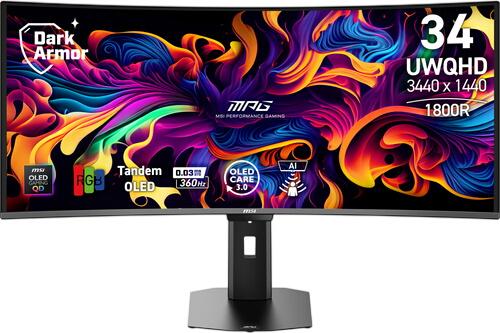
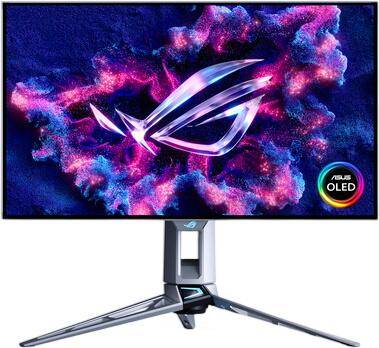
Newly Added Products






PC monitors: Consumer tips
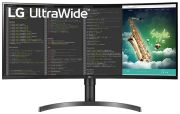
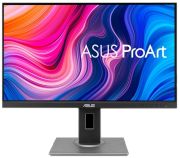
Available in a range of screen sizes, monitors are one of the most important peripherals for any PC. In this buying guide, we explain what to look for when choosing a new model.
The size of the monitor
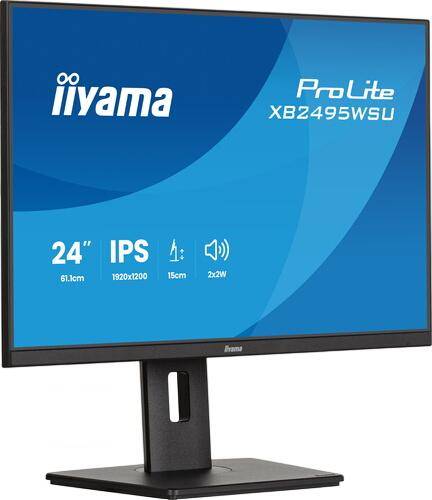
If you are planning to buy a new monitor, choosing the right size is an important consideration. The most common models range from 19 to 27 inches and come in a widescreen format. The ideal screen size ultimately depends on how you plan to use the monitor. For simple office tasks, a smaller model is usually sufficient unless you work extensively with Excel and need a better overview. In that case, a larger monitor or two monitors side by side may be a better choice. If, on the other hand, you want to enjoy films and computer games with a more immersive HDR experience, a larger screen is definitely preferable. There are also monitors with a pivot function that can be rotated into portrait mode, which is useful for long spreadsheets or layout work. As a general rule, we recommend choosing a model with a screen size of at least 22 inches.
Full HD resolution or 4K?
A monitor’s resolution indicates how many pixels are displayed on the screen. The higher the resolution (FHD, WQHD, UHD), the sharper the image. All monitors offer at least Full HD resolution (1,920 × 1,080 pixels). The larger the monitor, the more noticeable individual pixels become, as pixel density decreases. In most cases, however, this is hardly noticeable, since you have to be very close to the screen to see the pixels. For graphic designers, though, pixel density can be an important factor. 4K/UHD monitors with a resolution of 3,840 × 2,160 pixels have been available for many years. For normal office work, this is not necessarily required. However, if you play games frequently or stream high-resolution media content, a 4K monitor may be worth considering.
Short response times
A short response time ensures smooth display of fast-moving content. This is particularly important in action-packed computer games, but it also benefits football matches and films with a lot of motion. The value indicates how quickly a pixel can change colour. If the response time is too high, fast scenes may appear blurred, flicker, or leave visible trails on the screen. Most modern monitors offer a response time of around five milliseconds, while dedicated gaming monitors can achieve as little as 1 ms for especially smooth motion.
Brightness of monitors
The brightness of a monitor is measured in candelas per square metre (cd/m²). Most monitors offer a brightness of around 250 cd/m². The higher the value, the brighter the screen and the easier it is to read content in bright surroundings. As a general rule, a monitor should provide a brightness of at least 200 cd/m².
The contrast ratio (native and dynamic)
This value indicates the ratio between the darkest black and the brightest white that can be displayed at the same time. The higher the contrast ratio, the clearer and more vivid the image appears. Modern monitors with LED backlighting already offer very high values. In most cases, monitors have a ratio of around 1,000:1. As a rule, you should always pay attention to the static or native contrast ratio. Some manufacturers also specify a much higher dynamic contrast ratio (e.g. 1,000,000:1). In this case, the darkest possible pixel is compared with the brightest possible pixel, even though they do not appear on the display at the same time. Therefore, dynamic contrast is not a meaningful value for comparison when purchasing a new monitor.
Pay attention to connections
What is the point of the latest monitor if you cannot connect it properly? This issue mainly affects users of older computers or graphics cards. In many cases, however, adapters can help solve compatibility problems. In general, digital connections should be preferred. HDMI and DisplayPort are the most common options, while DVI is still found on some older devices. Before buying a monitor, you should check which ports are available on your graphics card.
Power consumption
For all technical devices, power consumption is an important criterion. After all, no one wants to pay a high electricity bill. Monitors today consume much less power than they used to. This depends, of course, on factors such as size, resolution, and brightness. A 24-inch monitor with Full HD resolution and a brightness of 250 cd/m² should not consume more than 30 watts during operation.