





Hedge trimmers: Consumer tips
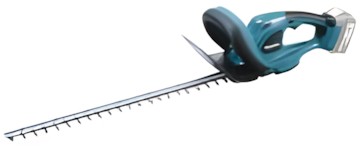
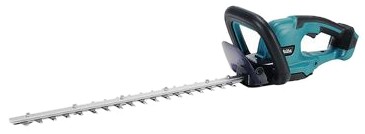
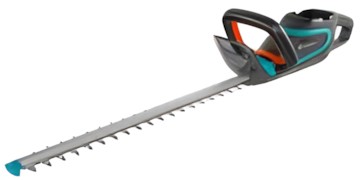
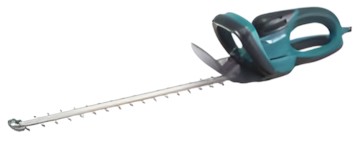
A mechanical hedge trimmer is up to 60 cm long, with the blades being about 30 cm long. It has a gripping handle and the blade is curved inward. The long handles provide a favourable leverage effect, allowing plant parts to be cut cleanly and precisely. The electric hedge trimmer has a blade length of 40 to 70 cm, to which a series of blades are attached. This allows the blades to cut the hedge very precisely. A chainsaw can be used to prune fruit trees or fell entire trees that disrupt the garden's landscape or have simply become rotten.
What types of hedge trimmers are there?
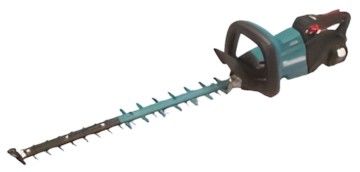
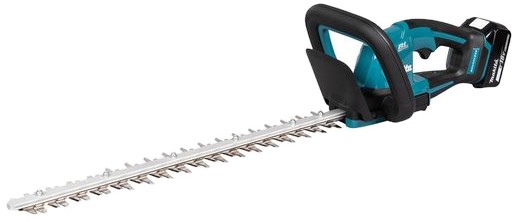
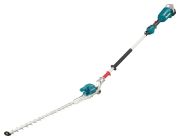
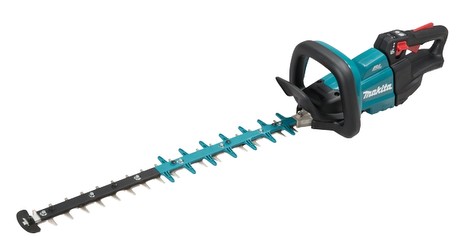
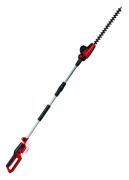
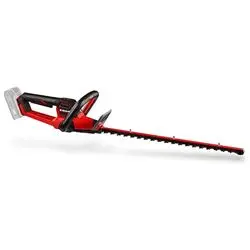
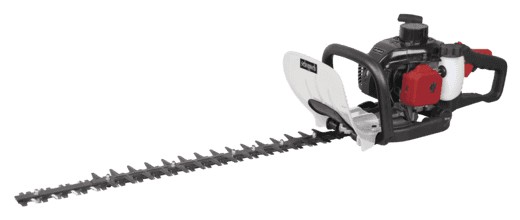
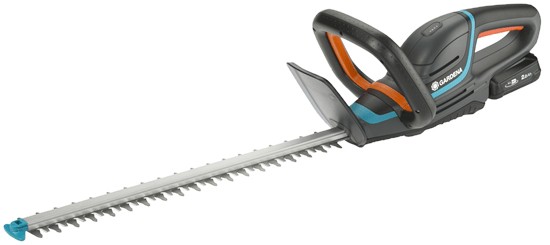
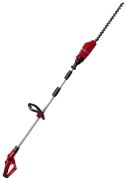
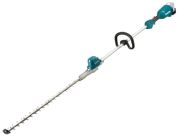
There are well over 150 types of hedge trimmers on the market. The types are generally divided into manual and motorised hedge trimmers, which can be operated either by hand or via a motor. They also differ in terms of cutting lengths and equipment variants. Hedge trimmers with extended handles are called "pole hedge trimmers". In addition, there are so-called "telescopic hedge trimmers", which are equipped with an adjustable-length handle. With these, high hedges can be cut without scaffolding or a ladder. Here, the blade bars can usually be angled in several positions up to 90 degrees. Besides manual and mechanical hedge trimmers, there are hedge trimmers with battery, electric, or petrol motors: battery-operated devices are only suitable for short tasks or require interchangeable batteries and fast chargers to work continuously. The most powerful electric hedge trimmers achieve between 500 and 750 watts of power, which is 0.5 to 0.75 kW. The lightest types weigh just under 2 kg, but most are in the range of 3 to 4 kg. Petrol-powered hedge trimmers have a power output of around 1 kW. The weight of these devices usually lies between 4 and 5 kg. The advantage of petrol-powered devices is the built-in power source and greater power. The disadvantages are their high noise level, the emission of combustion gases, the slightly higher maintenance effort for winter care, and their generally higher weight.
What are the differences between petrol, battery, and electric hedge trimmers?
- Petrol-powered hedge trimmers are particularly suitable for cutting larger hedges, as they offer the highest power and can easily cut through thicker branches. They are more durable than battery-operated electric hedge trimmers, and when the tank is empty, it can simply be refilled with petrol. The battery does not need to be charged first, and the hedge trimmer is immediately ready for use again. The cordless design allows for mobility and independence with the hedge trimmer. Those who work a lot with the hedge trimmer benefit from the freedom of legs and arms.
- Wired hedge trimmers with electric drive are independent of batteries, can be used continuously, and can have their working radius extended with an extension cord. They have a power output of 400 to 700 watts and are completely sufficient for most applications. With a low weight of 3.5 to 4.5 kg, they sit well in the hand. The operation is simple and safe thanks to a two-hand safety switch. They are suitable for home gardens with access to a power outlet and for longer tasks. However, care should be taken to ensure that the power cable does not lie in the working area.
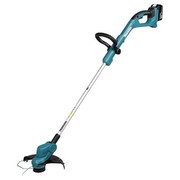
- Battery-powered hedge trimmers are quiet like wired devices and produce no exhaust fumes. The big advantage over these is that they can be used flexibly like a petrol-powered hedge trimmer anywhere and without a cable. This is a real advantage, especially if you have a large property or want to use the hedge trimmer elsewhere. Since most batteries today are equipped with lithium-ion technology, they have no memory effect and a long lifespan. However, since the operating time and performance of a battery hedge trimmer are limited, it is not suitable for continuous use.
What blade length is needed?
The blade length indicates the length of the blade of a hedge trimmer. The actual cutting length is always slightly shorter than the blade length, as the blade is partially housed in the device due to construction. How much can be cut at once also depends on the cutting length. The right blade length depends on whether you want to shape a small shrub or trim a tall hedge. The longer the blade, the more foliage can be cut at once; however, a long blade negatively affects ergonomics and handling. Especially when standing on a ladder and working overhead, one can quickly lose balance. Short blades are more manageable and agile and are suitable for precise work with the hedge trimmer. For motorised hedge trimmers, blade lengths between 40 and 70 cm are common, while for mechanical hedge trimmers, they range from 20 to 40 cm.
What is the correct cutting thickness?
The cutting thickness indicates the distance between the individual teeth of the hedge trimmer and thus the maximum thickness of the branches that can be cut. If you trim your hedge twice a year, a cutting thickness of 20 mm is sufficient. If you need to cut thicker branches because the hedge has been irregularly trimmed, you need a cutting thickness of 26 mm or more. However, not only must the cutting thickness be higher, but the motor power must also have sufficient reserve, as more force must be applied.
What should be considered when buying?
Buying criteria include a protective guard, a safety blade, two-hand operation, and a quick blade stop. For electric devices, attention should also be paid to a reasonable cable supply, an RCD (residual current device), and a special cable with a flexible spiral hose covering (to prevent accidental cutting). Furthermore, two-sided cutting devices are advantageous because they allow you to trim the farthest corners and edges of the hedge without straining.
What should be considered in terms of handling and storage?
It is important that hedge trimmers are regularly maintained to ensure they work safely and efficiently. Adequate protection for fingers, hands, and legs must be ensured! The hedge trimmer must always be operated with both hands, and before maintenance or cleaning work, the power plug or spark plug connector should always be removed. Additionally, the technically induced run-on time should be considered until the blade movement has completely stopped. After cutting, the cutting blades should be dried and sprayed with a care spray before being put away. For longer storage of petrol-powered devices, the carburettor and tank should be emptied. The lifespan of the blades is reduced by improper use, such as cutting into soil, stones, or wire. Resharpening is usually only worthwhile for high-quality devices. Sometimes, only the upper blade needs to be replaced or readjusted.