












Swimming pool: Consumer tips

What is an above-ground pool?
An above-ground pool is a free-standing garden pool that sits on the surface rather than being built into the ground. Most models use a heavy-duty liner supported by either an inflatable top ring, a metal frame or a rigid steel wall. Once filled with water, the structure holds its shape and provides a safe pool area when set up correctly.
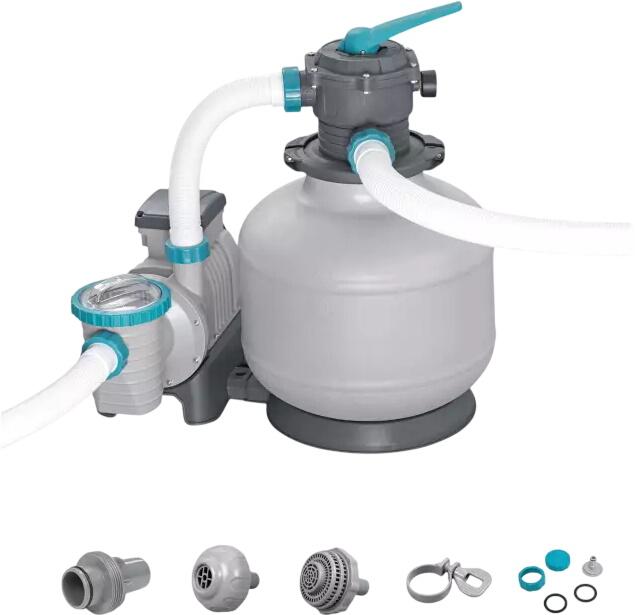
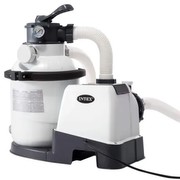
Unlike a permanent pool, an above-ground model can usually be dismantled at the end of the season or left up for longer, depending on the type. Many are sold with a pump and filter system to circulate the water and help keep it clean, while larger models may also support extras such as skimmers, covers, ladders and heating accessories.
Which type of above-ground pool is best?
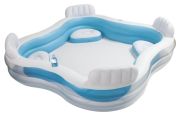
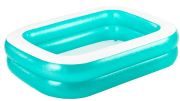
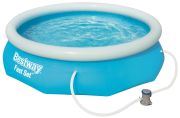
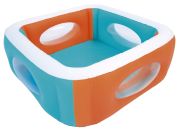
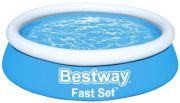
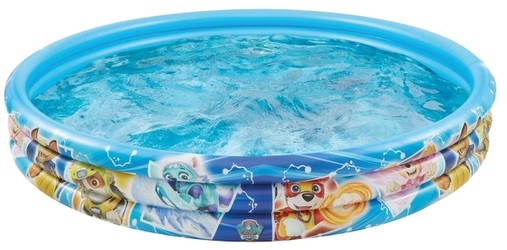
Inflatable or Quick-Up pools
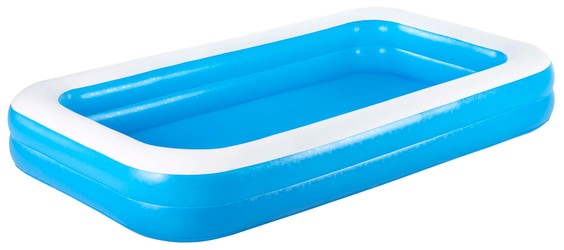
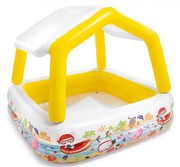
These are the easiest and cheapest option. They usually have an inflatable top ring and rise into shape as the water fills the liner. They are a good choice for:
- younger children
- occasional summer use
- smaller gardens
- buyers who want a low-cost seasonal pool
They are quick to set up, but they are the least robust option and not ideal if you want a larger, longer-lasting family pool.
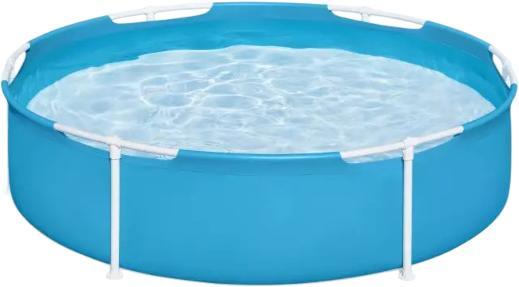
Frame pools
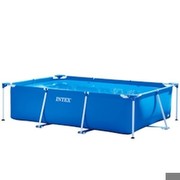
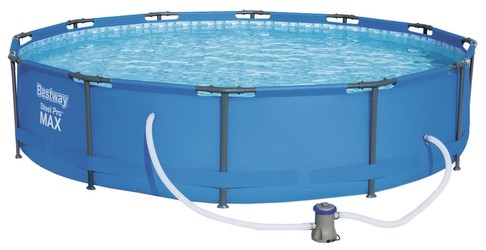
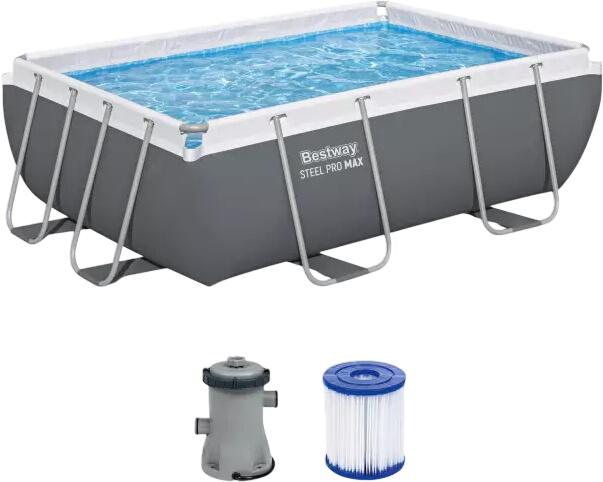
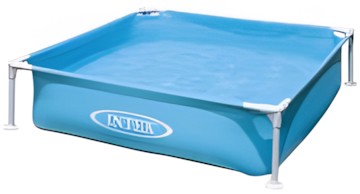
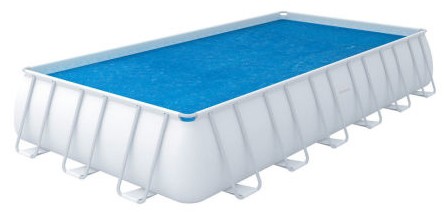
Frame pools are the most popular all-round choice for UK families. A rigid metal frame supports the liner, giving the pool better strength and stability than an inflatable model. They are available in round, oval and rectangular shapes and are a good fit for:
- regular family use
- older children
- households wanting a larger swimming area
- buyers who want better durability without moving into a semi-permanent installation
For many gardens, a frame pool offers the best balance of price, stability and usability.
Steel-wall pools
Steel-wall pools are the more substantial option. They are designed for longer-term use and usually feel closer to a permanent pool setup. They can offer better durability and a neater finished look, but they also require more preparation, more budget and more effort to install properly.
If you want a pool that stays in place for years rather than one summer, this is the category to consider.
What size pool should you buy?
The right size depends on your garden, budget and how you plan to use it.
If the pool is mainly for children to paddle, play and cool down, a compact round pool may be enough. If adults want to relax in it too, or if several family members will use it at once, it is worth going larger.
As a practical guide:
- smaller pools are fine for splashing and light play
- medium-sized pools suit most families
- larger rectangular pools are better if you want more room to move, float or swim short lengths
Rectangular pools often make better use of garden space than round ones, especially in narrower gardens. Also remember that the stated pool size is only part of the story. You will need extra room around it for:
- safe access
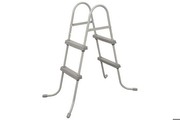
- a ladder
- the pump and filter unit
- maintenance access
- children moving around the pool safely
It is usually wise to leave clear space around the pool rather than trying to squeeze the biggest possible model into the garden.
Choosing the best spot in the garden
A good location helps with comfort, water quality and safety.
Look for a spot that is:
- as level as possible
- stable under heavy weight
- reasonably sunny
- not directly under trees
- convenient for access to water and power
- away from sharp stones, roots and rough ground
Sunlight helps warm the water naturally, which is especially useful in the UK. But too much exposure to falling leaves, tree sap or debris can make maintenance harder. Wind exposure also matters, because breezy gardens lose heat more quickly and collect more dirt on the water surface.
Why the ground matters so much
Ground preparation is one of the most important parts of the whole setup. An above-ground pool must sit on a level, stable base. Even small uneven areas can create extra stress on the frame or liner, affect water distribution and reduce safety.
Before installation:
- remove grass, stones and roots
- level the area carefully
- use a suitable protective groundsheet or base layer
- make sure the surface is firm enough for the full weight of the pool
This is particularly important because even a modest family pool becomes extremely heavy when filled. Once full, it cannot simply be shifted into place.
Water, electrics and practicalities
Before buying, check that you can realistically support the pool in day-to-day use.
You will normally need:
- a nearby outdoor tap or practical way to fill it
- space for the pump and filter
- a safe outdoor electrical supply for equipment
- a route for hoses and cables that will not create trip hazards
In the UK, it is also worth keeping local water-use restrictions in mind. During periods of drought or temporary hosepipe bans, filling or topping up a pool may be restricted depending on local rules. If restrictions are in place, check the guidance from your water supplier before filling the pool.
How to keep an above-ground pool clean
Clean water depends on three things working together:
- filtration
- water treatment
- regular physical cleaning
A basic filter pump helps circulate water and remove debris, but it is not enough on its own. You also need to monitor water quality and remove leaves, insects and dirt before they build up.
Routine care usually includes:
- running the filter system regularly
- skimming the surface
- brushing the sides
- vacuuming or cleaning the floor
- checking and adjusting water treatment levels
- covering the pool when it is not in use
The exact runtime for a filter depends on pool size, weather and usage, but in warm periods or with frequent bathing, it is better to think in terms of maintaining water clarity consistently rather than following one fixed number for every pool.
Water treatment and testing
To keep pool water safe and pleasant to swim in, the balance of the water needs regular attention. In practice, most home pool owners monitor:
- pH
- sanitiser level
- water clarity
Chlorine remains the most common treatment option for domestic pools, but other systems are available. Whichever method you choose, regular testing is essential. Test strips are convenient for everyday home use, while more detailed kits can offer better accuracy.
If you live in a hard-water area, scale build-up can also become a maintenance issue over time, particularly on liners, filters and accessories.
Useful accessories for an above-ground pool
Some accessories are genuinely worthwhile rather than optional extras.
Pool cover
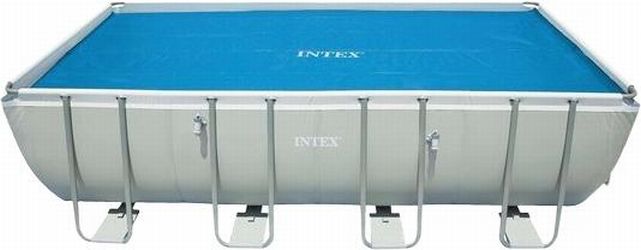
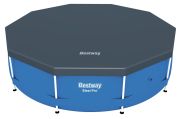
A cover helps keep out dirt, reduces heat loss and slows evaporation. It is one of the most useful purchases for any above-ground pool.
Ladder
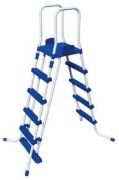
A stable ladder is essential for safer entry and exit on deeper models. In family gardens, removable or lockable ladder steps can also help reduce unsupervised access.
Groundsheet or protective base
This protects the liner from abrasion and minor ground imperfections and is often worth using even if the pool includes a basic sheet.
Skimmer and cleaning kit
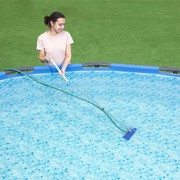
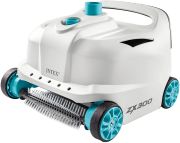
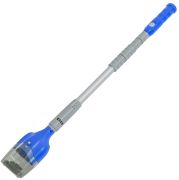
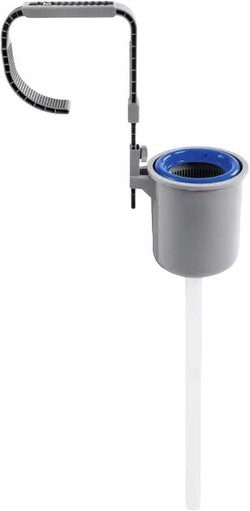
A skimmer, net, brush and vacuum or cleaner make ongoing maintenance much easier.
Heater or solar cover
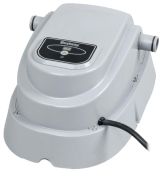
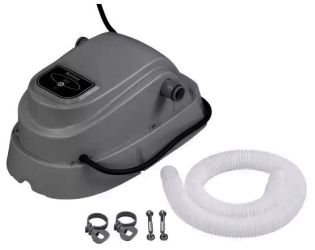
In UK conditions, unheated pool water can still feel cold even in summer. A solar cover can help retain warmth, while dedicated pool heaters can make a much bigger difference if you expect regular use.
Pool alarm or additional barriers
If young children are in the household, safety measures around access become especially important.
Safety matters more than style
An above-ground pool is still a serious water hazard, especially for children. Never rely on the pool’s wall height alone as a safety measure. Good practice includes:
- constant adult supervision
- restricting access when the pool is not in use
- using a ladder that can be removed or secured
- keeping the area around the pool free from slip and trip hazards
- setting clear household rules around swimming
Do not assume that products marketed with general safety language remove the need for supervision.
Winter storage and end-of-season care
The best way to store or winterise a pool depends on the type.
Inflatable and lighter seasonal pools
These are usually best:
- drained completely
- cleaned thoroughly
- dried fully
- folded carefully
- stored in a dry, frost-free place
Larger frame or steel-wall pools
Some can be left in place over winter if the manufacturer allows it and the pool is properly winterised. This usually involves:
- cleaning the pool thoroughly
- lowering the water level if recommended
- draining pumps, hoses and filter equipment
- storing removable parts frost-free
- fitting a secure winter cover
Always follow the instructions for your specific model rather than assuming every pool can be left up outdoors through winter. UK winter weather, standing water and freeze-thaw cycles can shorten the life of liners and fittings if the pool is not prepared correctly.
Which above-ground pool is right for most UK buyers?
For most households, a frame pool is the best all-round choice. It offers a noticeable step up from an inflatable pool in stability and lifespan, without the complexity and cost of a steel-wall setup. If you only want something simple for young children during hot spells, an inflatable pool may be enough. If you want a more durable, semi-permanent garden pool, a steel-wall model is the stronger long-term option.