





































Newly Added Products











TV/Projector Accessories: Consumer Tips

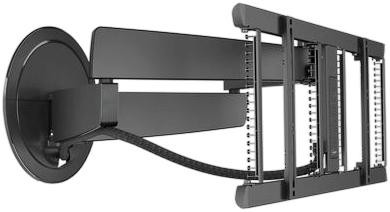
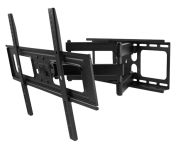
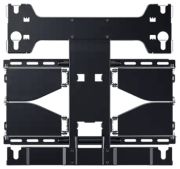
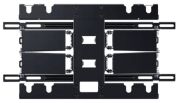
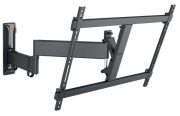
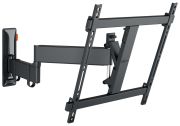
The mounts should be equipped with a movable rail system, an adjustable tilt angle, and a smooth swivel arm with joints, allowing for flexibility in viewing angles while watching TV. The degrees of rotation and tilt vary from model to model. A slim profile allows for a small wall distance, so the TV and mount do not protrude too far into the room.
Most TV mounts are made of aluminium. It is important to note the maximum load capacity to ensure that the mount does not pull away from the anchorage along with the TV. Of course, the mount must be compatible with the size of the TV, measured by its screen diagonal.
Rack
The term rack comes from English and roughly means stand, frame, or cabinet. It refers to a holding device that combines several smaller elements into a unit. In electrical engineering, it is generally referred to as a carrier for assemblies. As a piece of furniture, a rack refers to shelves for storing or displaying HiFi and TV devices, which are a practical alternative when wall mounting is not desired or possible. HiFi or TV racks do not have standard widths and are usually adapted to the appearance and size of the HiFi devices. They are mostly made of stainless steel, glass, wood, or aluminium.
When purchasing a rack made of wood or wood composite materials, attention should be paid to the wood glues, paints, etc., used by the manufacturer. Especially with imports, there is a possibility that solvent-containing - in the worst case, even formaldehyde-containing - resins or adhesives have been processed. The fumes from the solvents are released into the environment throughout the lifespan of the furniture and can be harmful to health. TV racks may have built-in amplifiers and speakers. A rack should have sufficient stability and provide enough space for all existing entertainment electronics devices. Additionally, it should have a smooth rolling mechanism that works well even on carpet. Often, when assembling the rack, you can decide whether to mount it on wheels or feet.
Stand Base
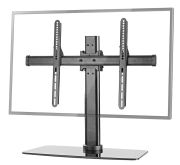
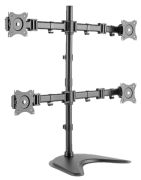
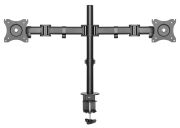
If you only want to accommodate your TV and at most one other device, you can also opt for a TV stand base. It is important that the maximum allowable weight is not exceeded, as the mount holding the TV could break. Stability is also a consideration. The stand base must be matched to the size of the TV. Some stand bases are only suitable for specific TVs from the same manufacturer. The swivel angles depend on the model, and in some cases, the stand bases can be electrically swivelled. Some TV stand bases also allow for cable management to be concealed.
Speakers
The most important thing is to ensure that the speakers are compatible with the TV to be connected. You then have the choice between external standing and under-shelf speakers. Especially for movie sound, one should not forgo a spatial sound experience, so the speakers should be oriented for surround sound. The established standards here are 5.1, 6.1, and 7.1 multi-channel sound. The number before the point represents the number of speakers distributed in the room, while the number after the point indicates the presence of a subwoofer. Subwoofers are special speakers designed solely for the reproduction of low-frequency sound waves, i.e., bass. Amplifiers and speakers designed for stereo sound are not very suitable for reproducing surround sound.
Additionally, an exact placement of the speakers is important. The Dolby Surround Pro Logic standard specifies the exact arrangement. If you do not want to buy a complete 5.1 system, you also have the option to supplement your existing speakers. The new speakers should definitely have the same sound character as the existing ones, preferably the same speaker chassis. Only in this way can sound distortions be prevented when the sound moves from one speaker to the next.