












Skates: Consumer tips

The blades must be as smooth and sharp as possible. There is a distinction between standard steel blades and blades made of plastic or carbon. The former need to be regularly sharpened (usually once a year), while the thin glide surface of the plastic blades cannot be sharpened. However, they can be relatively easily replaced. The advantage of plastic blades is their lighter weight and that they stay sharp longer than regular steel blades. Furthermore, skates are generally distinguished by two types of upper material: leather and synthetic materials. Leather has the advantage of being more breathable and the material stretches. This way, it adapts to the foot when worn for a longer time. The downside is that leather dries slowly and becomes quite heavy. Synthetic materials, on the other hand, are often waterproof, breathable, robust, and still very light. Additionally, they are easier to care for than leather and dry faster. The disadvantage is that they do not allow quite as much water vapour to pass from the inside to the outside, causing you to sweat more quickly in the shoes. In general, these models are also distinguished between hard and soft shell shoes. Hard shell shoes have an outer shell made of rigid plastic, making the material even less flexible.
What types of skates are there?
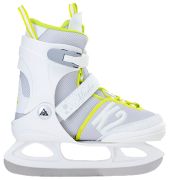
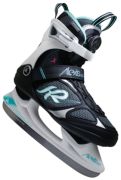
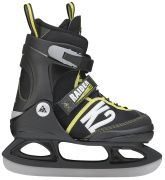
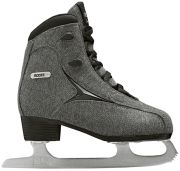
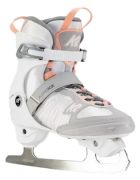
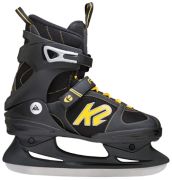
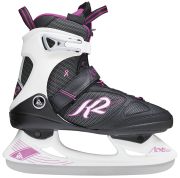
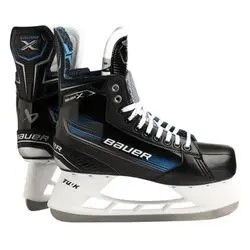
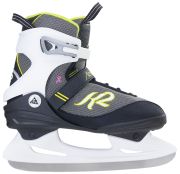
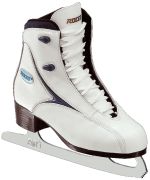
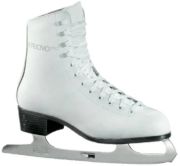
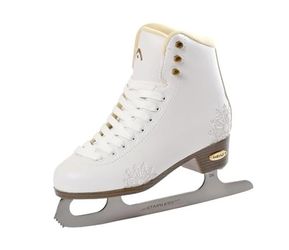
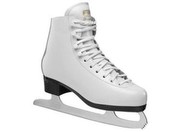
There are four types of skates: ice hockey, figure skating, speed skating, and all-round skates. Ice hockey skates are usually only thinly padded, but provide firm support due to a shaft laced up over the ankle. They are also reinforced in the heel and Achilles tendon area to prevent player injuries. Compared to other types of skates, the approximately 5 mm thick steel blade is particularly short, which increases manoeuvrability. Figure skating skates are high-laced boots that reach up to the calves and have jagged tips on the approximately 3-4 mm thick steel blades, which figure skaters need for jumps or spins. Speed skating skates have a short shaft with lacing that only reaches below the ankle. The blades are significantly longer than those of the other models (about 38-45 centimetres) and have a thickness of about 1.3 to 1.5 millimetres. This allows athletes to push off better while running and thus gain more speed. However, they are also less manoeuvrable. All-round skates are generally more padded than the other mentioned models and are usually equipped with quick-release fasteners or a combination of quick-release fasteners and laces.
What should be considered when buying?
When it comes to size, it should be noted that the shoe should not pinch but should fit snugly. When you push your foot all the way forward with the closure open, there should be no more than a finger's width of space between the heel and the shoe. It is best to try on shoes in the afternoon, as feet swell throughout the day. Make sure that the blades are already sharpened, as otherwise, additional costs of around six to twelve pounds for sharpening will need to be considered from the start. Especially in the inner shaft area (i.e., at the ankle), skates should be as padded as possible. It should always be noted that the padding material has no seams, which could lead to uncomfortable pressure points. Regarding the closure type of the skate, laces have the advantage of providing very good support in the shoe. However, lacing can be relatively time-consuming with many eyelets. Quick-release fasteners with buckles allow for comfortable and quick putting on and taking off, but only provide a limited good hold, as the shoe cannot be optimally adjusted to the foot. A combination of lacing with few eyelets and quick-release fasteners allows for relatively quick putting on and taking off, and the wearer can still adjust the skate well to their foot shape.