










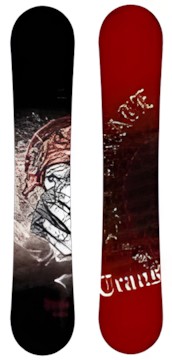



Buy snowboards cheaply: Consumer tips
The base (or also called the base) on the underside is made from various materials and improves wax absorption and thus gliding properties. To secure the snowboard boots on the board, two snowboard bindings are mounted on the top. There is a distinction between plate and soft bindings as well as between step-in and semi-step-in bindings.
What types of boards are there?
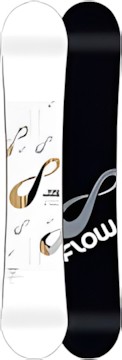
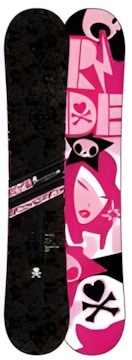
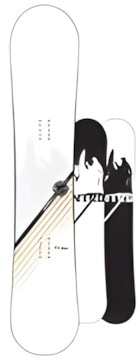
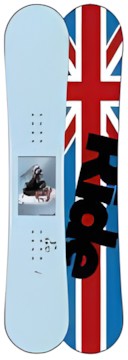
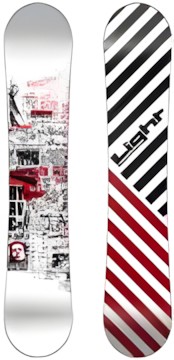
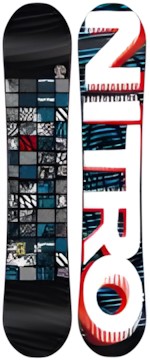
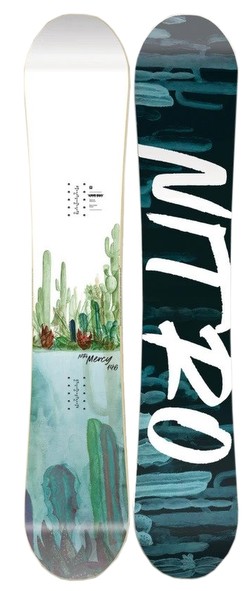
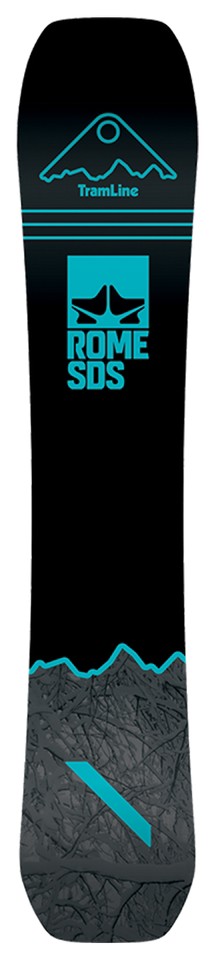
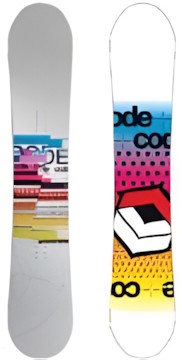
In principle, a distinction is made between freestyle, freeride, and race boards. A freestyle board is rather soft, not particularly long (130-165 cm), and the tail is identical to the tip. However, newer generations are harder to cope with the strong stresses that occur during long jumps, thus facilitating handling at high speeds. Freestyle boards are designed for jumping, landing, and rail riding and are best suited for use in the fun park or pipe. They are exclusively ridden with soft bindings. Freeride or all-mountain or all-round boards are wide and soft and primarily intended for deep snow riding. Nevertheless, they can also be used for carving or doing smaller tricks on the piste. The tail is slightly raised. The shovel should be long, high, and soft to provide plenty of lift in deep snow. They are particularly well-suited for beginners. They are almost always ridden with soft bindings. The race board is a tapered, quite stiff snowboard designed for use in races. Especially due to the high swing weight, it is rather unsuitable for any jumps with rotations in the air. Race boards have a flat, short tip and are usually longer than freestyle or freeride boards. They are exclusively ridden with hard boots and plate bindings to ensure precise control even at high speeds. Of course, there are many other types of boards. A special mention is the wide board for riders with particularly large feet.
What should be considered when buying?
In general, one should ensure that the board, binding, and boot are harmoniously coordinated to function optimally. In terms of length, the board should reach at least to the chin and at most to the nose. Short boards are more agile but less stable at high speeds. Longer boards are much more stable and offer better grip on hard and icy surfaces. For children, there are now models with correspondingly smaller dimensions. The base should not only be smooth but also robust (against scratches) and easy to maintain (preferably easy to wax). However, not all properties can be perfectly combined, as a robust and particularly gliding base needs to be waxed more often than a softer base. When choosing the type of snowboard, you should go by your individual preferences (see above).