

















Newly Added Products


Boating: Consumer Tips

The inflatable, bathing, or airboat
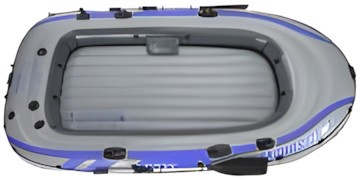
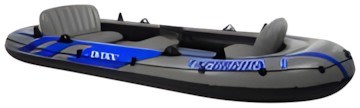
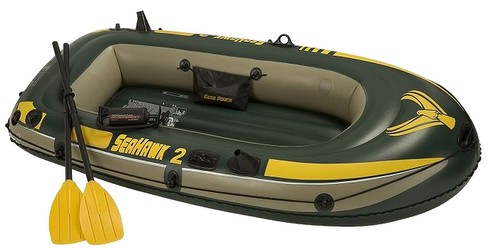
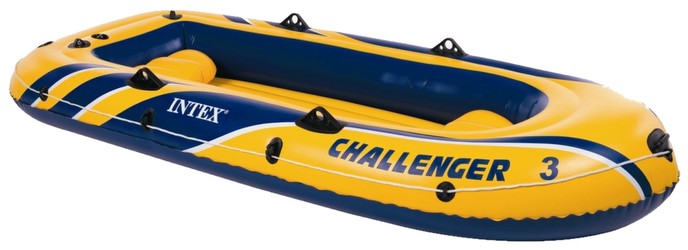
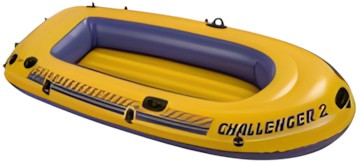
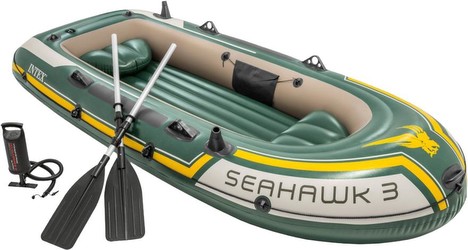
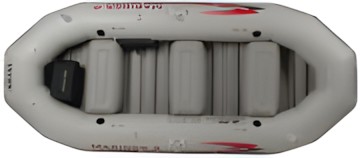
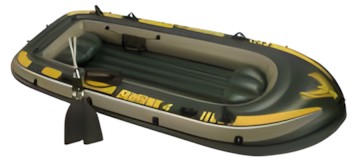
One distinguishes between fully inflatable dinghies, the “bathing boats”, fully inflatable dinghies with solid wooden, aluminium, or inflatable floors, as well as rigid inflatable boats made of GRP or aluminium.
Fully inflatable dinghies, whether with or without solid floors, are referred to by boat builders as Inflatables and rigid inflatable boats as RIB (Rigid (Hull) Inflatable Boat). Nowadays, the tubes and any inflatable floors are usually divided into several chambers to prevent sinking in the event of damage to one chamber. Propulsion is provided either by paddles, a mechanism with a steering rope and rudder, or even engines. The material of the tubes is usually made of plastic film, softened PVC, rubberised fabric (e.g. Hypalon), or synthetic rubber (e.g. polyurethane). Plastic films are very cheap but only partially gas-tight and are therefore mostly used for bathing boats. PVC is still used in many dinghies today, but it is controversial because over time it releases its plasticiser, becomes hard, brittle, and gas-tight, and is irreparably damaged after about 10 years. Hypalon, on the other hand, does not age and anyone who has ever repaired a bicycle inner tube can fix a Hypalon dinghy. It is expensive but lasts for several decades. Polyurethane is hardly repairable and, even with careful treatment, lasts only about 15 years. Higher-quality boats are always made from multi-layer materials (Hypalon or polyurethane with neoprene) and are almost damage-proof. Dinghies can now reach a length of 2.5 to nearly 20 metres. As a rule of thumb: For about 4 people, the boat should be 3 metres long, for about 6 people 4 metres, and for about 8 people 5 metres long.
The canoe or kayak and the Canadian
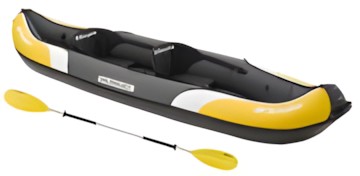
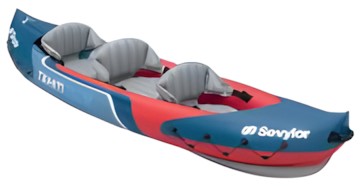
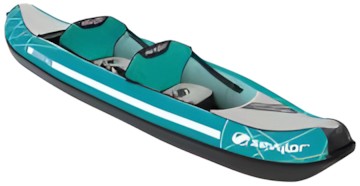
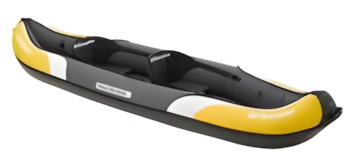
The word canoe is actually just the umbrella term for all water sports devices that are moved with paddles facing forward. In this context, kayaks and Canadians are the two main subgroups of canoes. Kayaks differ from Canadians in that one sits with legs extended on the floor in a kayak, while one kneels or sits on an elevated seat in a Canadian. Kayaks are paddled with a double paddle, while Canadians are propelled by a single-bladed paddle. Additionally, Canadians are usually open on top, with plenty of space for luggage and people, but they can be closed with a spray cover. Kayaks, on the other hand, are closed except for the small opening where the kayaker sits. Today, kayaks and Canadians are primarily made from Royalex, polyethylene, fibre-reinforced plastics, and other plastics, aluminium, or wood. Canoes made from Royalex are practically maintenance-free, virtually indestructible, and can be easily glued if necessary. There are two types of polyethylene canoes, the first of which is reinforced by an aluminium frame, making it relatively heavy but almost indestructible. The second type of PE canoe consists of several PE layers of different hardness and density, is unsinkable, and nearly indestructible. Nevertheless, a PE canoe is about 20-30 percent heavier than a similar Royalex boat. For canoes made from fibre-reinforced plastics (glass, carbon, diolen, or Kevlar fibres), the material or material composition has a greater influence on the use of the boat in different waters than with PE and Royalex canoes, allowing one to choose the boat according to individual preferences and usage locations. Aluminium canoes require the least maintenance of all materials. However, the downside is that they paddle “loudly”, are cold in cold water, and become very hot in the sun. Additionally, most types have integrated stiffening ribs that can cause painful pressure points for paddlers when kneeling. Wooden canoes, especially due to their visual appearance, need to be treated very carefully to avoid affecting their look. However, minor damages are easy to repair. Overall, these boats require careful, material-conserving handling and some maintenance. If this is the case, the boats can last a lifetime. A special feature among canoes are folding kayaks and folding Canadians, as in these models the flexible boat outer skin is stretched over a collapsible frame made of aluminium tubes or wood and can be easily transported.