



Kettles: Consumer tips

What matters most is practicality. A kettle should be quick, easy to fill, comfortable to pour and simple to descale. It also needs to suit your household habits. A single person who boils one mug at a time may be better off with a compact model, while a busy family or a household full of tea drinkers may prefer a larger kettle with a higher usable capacity and a clearer water window.
Choosing the right size
Most standard kettles sold sit around the 1.5 to 1.7 litre mark, but smaller and larger options are widely available. The right capacity depends on how much water you usually boil in one go. If you mainly make one or two drinks at a time, a very large kettle can be less convenient because the minimum fill level may force you to boil more water than you need. That can add time and unnecessary electricity use.
On the other hand, if several people regularly use the kettle in quick succession, a larger model can be more practical. The aim is not to buy the biggest kettle possible, but the one that best matches your daily routine. In most homes, efficient use comes from boiling only as much water as needed rather than relying on broad energy-saving claims that may vary by appliance, quantity and usage pattern.
A sensible size check includes:
- how many mugs or cups you usually make at once
- whether the kettle has a low minimum fill
- whether you want a compact model for a smaller kitchen
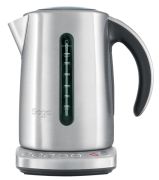
- whether the water level window is easy to read
Speed, power and everyday use
A higher-wattage kettle will boil water more quickly, but speed is only one part of the buying decision. Many mainstream kettles already offer rapid-boil performance, so usability, noise and handling can be just as important as outright power.
For most households, the best kettle is one that combines decent boiling speed with clear controls and reliable safety features. If you frequently boil small amounts, some models are designed to handle one cup more efficiently, although real savings depend on how accurately you fill them.
Variable temperature and keep-warm features
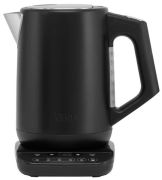
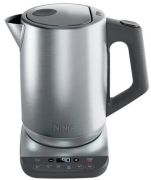
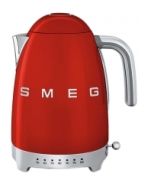
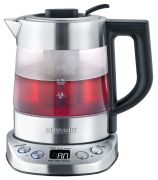
Temperature control is one of the most useful upgrades for buyers who do more than simply boil water for standard tea. Variable-temperature kettles let you heat water to different settings, which is handy for green tea, delicate teas, some coffee styles and baby feeding preparation where the guidance is specific to the task.
It is better not to treat one exact temperature as universal for every drink. Green tea should be brewed below boiling, and some coffees also benefit from slightly cooler water, but the ideal setting depends on the drink and personal preference. A kettle with several presets gives you more flexibility than a model that only boils to 100°C every time.
A keep-warm mode can also be useful, especially in home offices or kitchens where several drinks are made over a short period. It is not essential for everyone, but it can be a worthwhile convenience feature.
Useful premium features include:
- variable temperature settings
- keep-warm function
- rapid-boil mode
- clear controls with easy-to-read indicators
- quieter boiling, if noise matters in your kitchen
Heating element, limescale and maintenance
Many kettles use concealed heating elements, which usually makes the interior easier to wipe clean and less awkward to descale than older exposed-element designs. However, it is better not to assume the whole market is identical. Build quality and ease of maintenance still vary from one model to another.
If you live in a hard-water area, limescale management should be part of your decision. A removable and washable limescale filter is useful, particularly if you notice flakes in boiled water. It does not replace descaling altogether, but it can improve day-to-day use. A wide-opening lid also makes cleaning much easier.
Material choices
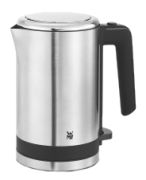
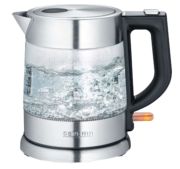
Kettles are commonly made from plastic, stainless steel or glass, and each has its own appeal. Plastic models are often lighter and mostly cheaper. Stainless steel kettles are popular for their robust feel and classic look. Glass kettles can look stylish and make the water level easy to see, but appearance should not matter more than comfort and cleaning practicality.
Some buyers also prefer double-walled designs, which can help the exterior stay cooler to the touch and may reduce noise slightly. If safety, insulation or a quieter boil matters to you, this is worth considering.
Comfort and safety
A good kettle should feel straightforward and safe to use every day. UK buyers should also expect the basics of electrical suitability and safety for the local market. That means the product should be suitable for UK mains use, come with the correct UK 3-pin plug, and be appropriately marked for sale, such as with UKCA or CE where applicable.
The most useful safety and convenience features are:
- automatic shut-off when the water has boiled
- boil-dry protection
- secure placement on a 360-degree base
- a lid that opens smoothly and widely
- a handle that stays comfortable and secure when pouring
- an easy-to-read water level window
- a removable limescale filter
- suitable UK plug and mains compatibility
Cordless kettle jugs on a separate base are now standard in many homes because they are easier to lift and pour than fixed-cord designs.
What should buyers prioritise?
For most people, the best kettle is not the one with the longest feature list. It is the one that boils the amount you actually use, fits comfortably on your worktop, pours cleanly and is easy to maintain. Tea drinkers may get genuine value from temperature presets. Households in hard-water areas should pay extra attention to descaling access and filter design. Anyone replacing an older model should also think about everyday usability, not just style.