












Newly Added Products




TV / satellite dishes: Consumer tips

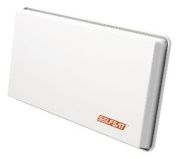
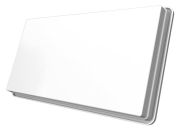
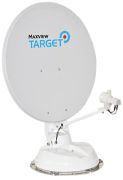
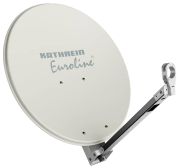
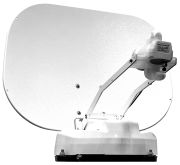
It is shaped like a parabolic mirror, reflecting the incoming rays and focusing them due to its concave shape onto a focal point, at the centre of which sits the actual receiving element, the LNB. However, the satellite dish not only focuses the signals from the satellite but also, due to its directional effect, helps to filter out interference. Typically, the diameter of the dish is 60 or 80 centimetres. An 80-centimetre parabolic antenna receives double the energy of a 60-centimetre antenna and therefore has better reception properties. The LNB amplifies the weak signals from the satellite and simultaneously converts them to another frequency (intermediate frequency).
What differences are there?
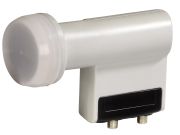
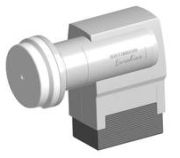
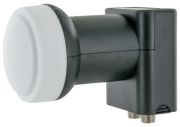
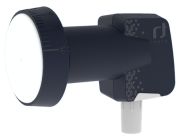
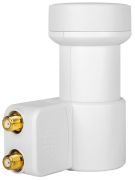
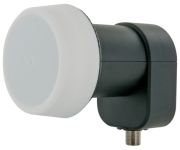
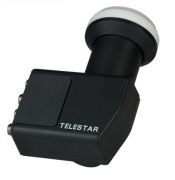
Standard or analogue LNBs can only receive signals in the lower frequency range, the low band. Universal LNBs or dual-band LNBs, on the other hand, also cover the upper frequency range, the so-called high band. Such LNBs are also referred to as digital-compatible. The term 'digital' refers to the reception area for digital TV. In principle, LNBs are distinguished by the number of their connections. The Universal single LNB has one output for connecting a digital receiver. This allows it to receive both analogue and digital programmes transmitted via the Astra and Eutelsat satellites. The universal twin LNB has two outputs for connecting two receivers or one twin receiver. The corresponding switching device (multiswitch) is usually integrated.
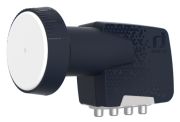
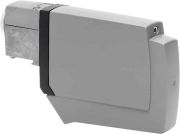
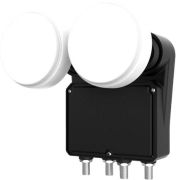
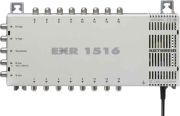
The universal quattro LNB has four outputs. It is not used alone but is intended for connection to a multiswitch, which allows the operation of any number of receivers. The universal quad LNB also has four outputs, with all four levels available at each output due to an integrated multiswitch. This allows up to four receivers to be operated in parallel. With the universal octagon LNB and its eight outputs, as well as the integrated multiswitch, up to eight receivers can be connected. A duo LNB or monoblock LNB can receive two adjacent satellite positions simultaneously with a wide LNB head, thus saving the need to set up a second large satellite dish. A multiswitch, usually for multiple outputs, is already integrated. Unicable LNBs have a single connection through which multiple receivers can be connected via a common coaxial cable. It can typically supply a maximum of four satellite receivers with a signal. A special feature is the interactive LNB (iLNB). It is used in satellite systems that have a return channel and for sending and receiving internet signals.
What should you consider when buying?
For satellite reception, the general rule is: the larger the satellite dish, the better the reception. For a communal system, one should choose a dish with a diameter of at least 90 cm. When purchasing a new satellite dish, the LNB is sometimes included. When buying a single LNB, it is essential to check whether it is digital-compatible. It is also worth considering whether you want to operate just one or multiple receivers.