








Buy drills cheaply: Consumer tips

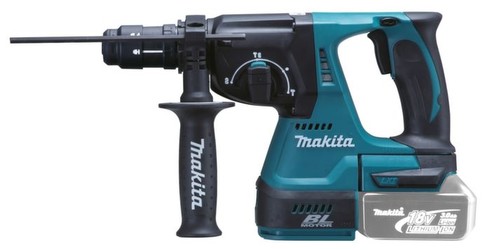
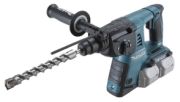
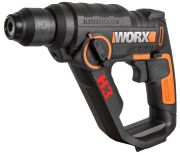
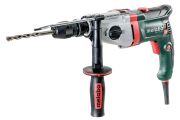
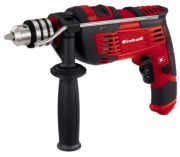
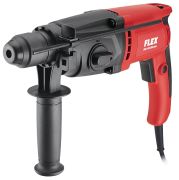
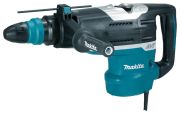
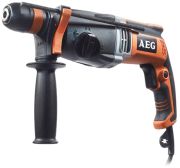
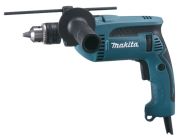
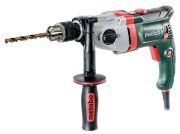
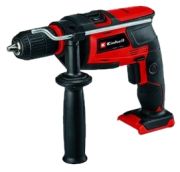
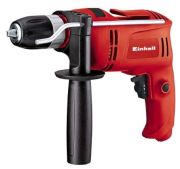
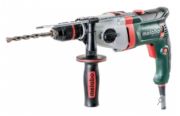
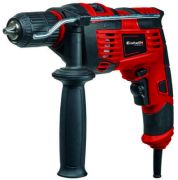
The impact drill is used for drilling in wood, metal, concrete, and stone as well as for screwing. The difference between an impact drill and a regular drill is the impact mechanism, which is absent in a standard drill. The impact mechanism expands the range of applications to drilling in harder materials, such as masonry. The impact energy is generated by the user's applied pressure. The higher the applied pressure, the faster the drilling progress. A rotary hammer, on the other hand, has a pneumatic hammer mechanism that generates impact energy independently of the applied pressure. Furthermore, the rotary hammer operates at a lower impact rate than the impact drill, but with a significantly higher impact energy. A rotary hammer is primarily specialised for drilling in concrete, stone, and granite. With an available impact stop, chiselling work can also be performed with the rotary hammer. Another difference from the impact drill is that the rotary hammer has an SDS chuck for tool attachment, while the impact drill uses a keyless chuck. The SDS chuck allows for easy changing of the drill bit or chisel within the chuck.
What should I consider regarding impact rate and motor power?
The impact rate indicates how many blows per minute an impact drill can perform. In modern impact drills, this varies between 35,000 and 55,000 blows per minute, with 40,000 blows being sufficient for normal impact drilling. An important value in impact drilling is the single impact energy, which is calculated in joules. It indicates how powerful the individual blows are. Typically, the single impact energy ranges between 1.5 and 3.5 joules. For professional applications, a value of over 2.5 joules is recommended. The motor power values for drills range between 500 and 1,000 watts. In principle, a machine with high motor power can provide a higher torque and thus accommodate larger drill attachments. A device with 700 watts should be able to handle all normal tasks in the home.
What should you pay attention to when buying?
The device should have an impact-resistant chuck that is unaffected by the vibrations of the impact mechanism. This chuck is often offered as a quick-change chuck. The advantage is that no tools are needed when changing the drill, making the drill change more convenient. The machine should have a two-speed gearbox or a stepless speed control. The first gear provides high torque at low speed and is suitable, for example, for screwing large screws, as more power and less speed are required. The second gear, on the other hand, is suitable for drilling smaller screws at higher speeds. A direction switch, also known as a right/left rotation, allows for drilling both clockwise and counterclockwise. This function also serves to unscrew screws. A drilling depth stop is practical, limiting the depth of the drill hole and thus preventing drilling through a wall, for example. Also, pay attention to the clamping range. This indicates how large the diameter of the drill bits can be, both maximum and minimum. For normal use, drill bits larger than 15 millimetres in diameter are generally not required.