






Buy hot water appliances cheaply: consumer tips

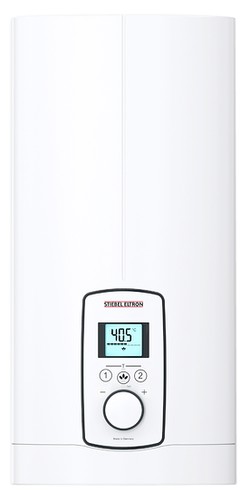
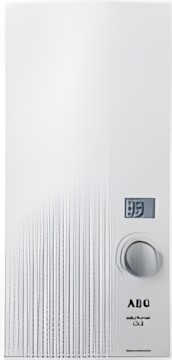
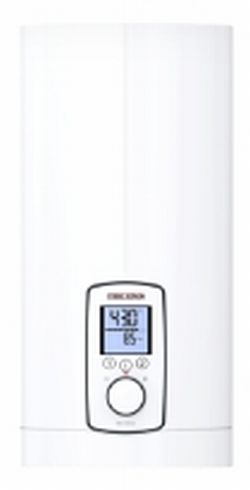
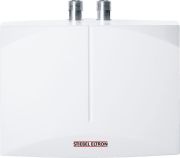
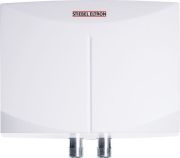
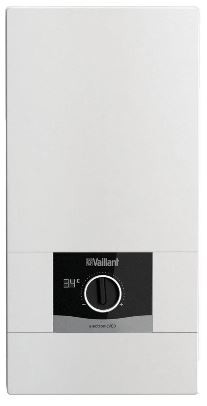
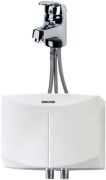
Instantaneous water heaters
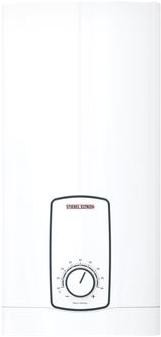
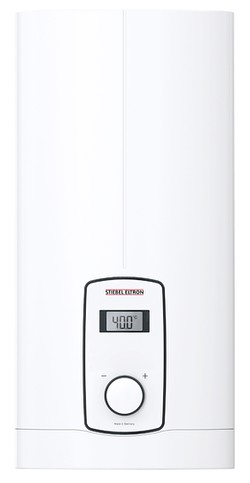
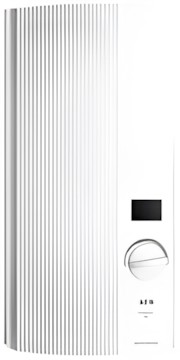
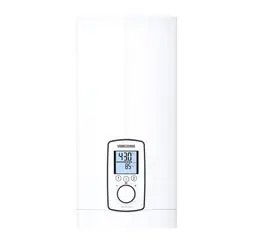
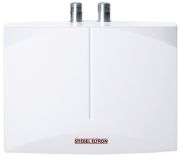
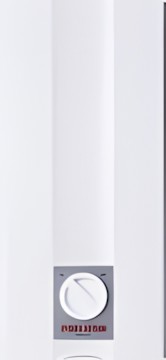
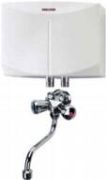
The desired temperature can be continuously adjusted between 30 and 60 degrees Celsius and remains constant regardless of the amount of water drawn and water pressure. There are gas-operated and electric variants. The former is more efficient in terms of consumption costs, but a gas line must also be available. During operation, the amount of gas used is, by the way, negligible.
Generally, instantaneous water heaters heat water as it flows. The device is only switched on during the draw-off process, and only the amount of water currently needed is heated. This eliminates energy losses from storing hot water, as with a storage heater. No limescale deposits form within the device, making instantaneous water heaters maintenance-free. A disadvantage of instantaneous water heaters is that very large amounts of hot water cannot be provided as quickly as, for example, with a conventional boiler. Additionally, with gas instantaneous water heaters, the flames or combustion process can be heard clearly. Compared to a device with a hot water storage tank, it takes longer to fill a full bath.
Hot water storage tanks
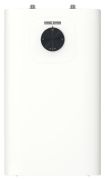
Hot water storage tanks are available as wall-mounted and standing tanks, as well as under-sink/over-sink small storage tanks. Small storage tanks can be installed, for example, in the sink cabinet or under the washbasin, and wall-mounted devices are large enough to supply an entire family. The capacity of hot water storage tanks ranges from five to about 160 litres. They reliably provide water for several draw-off points. Thanks to the continuous temperature selection, warm water is always available in sufficient quantity. Heating usually occurs at night. For a household of four, a hot water storage volume of about 160 litres is sufficient. From about 80 litres, it is possible to draw warm water simultaneously from several outlets.
Storage tanks are relatively easy to maintain and clean. However, the costs incurred due to the more complex pipe installation and the electrical energy of the circulation pump are a disadvantage. Since cold water must be mixed in to achieve the desired usage temperature, storage systems generally require more water compared to electronic instantaneous water heaters. Overall, instantaneous water heaters represent the more energy-efficient solution. Additionally, hot water storage tanks experience heat losses. To reduce these losses, good thermal insulation of the tank is essential. Lower water hygiene (legionella) can occur with large storage volumes and low storage temperatures. After a shutdown and cooling of the tank, hot water is not immediately available upon restart. A special feature is indirectly heated hot water storage tanks: here, a gas burner provides space heating, and with the help of a second heating circuit, it heats the hot water storage tank.
Indirectly heated drinking water heaters
In the case of indirectly heated drinking water heaters, the boiler serves a dual function for space heating and water heating. In the vast majority of cases, natural gas and heating oil are used as energy sources, with electricity being extremely rare. Indirectly heated drinking water heaters are available from about 50 litres capacity as wall-mounted and standing tanks. The lower operating and maintenance costs are advantageous. Wall-mounted combination devices usually do not have a storage tank for heated drinking water. However, there are exceptions where a very small amount of water, a few litres, is stored. For larger amounts of water, such as for bathing, it is heated in flow operation.
Boiling water devices
Boiling water devices are primarily suitable for use in the kitchen and are installed above the draw-off point. The tap allows for filling as well as hot and cold water withdrawal. The capacity is about five litres, and the temperature can be continuously adjusted from about 35 degrees Celsius to the boiling point. When the selected temperature is reached, the device automatically switches off. Only as much water is heated as is currently needed, for example, for rinsing. Heating usually occurs via an electric insert or gas burner.
Domestic hot water heat pump
When it comes to the economical hot water supply for single-family homes or commercial enterprises, hot water heat pumps are the energy-saving alternative to central heating. They utilise waste heat from electrical devices such as freezers, etc., to heat the domestic hot water. An air/water heat pump extracts 75 percent of the energy from the ambient air, with the remaining 25 percent coming from electrical drive energy. The operating time of the heat generator is reduced by using a domestic hot water heat pump. The devices operate quietly, do not emit odours, do not produce soot, require little space, and are quickly installed – in some cases, they are delivered ready to plug in.
The integrated or external storage of the domestic hot water heat pump typically holds 300 to 400 litres. In general, to operate cost-effectively, the device should have a coefficient of performance above 3. This means that approximately three kilowatt-hours of heat are produced from one kilowatt-hour of electricity. In addition to heating water, domestic hot water heat pumps can, depending on the model, also de-scale water and dehumidify the room air. The cooled air that exits through the exhaust duct of the device can be used for free cooling of rooms.