
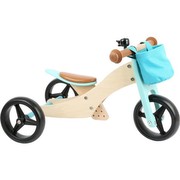
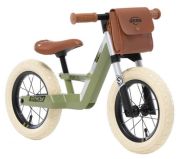
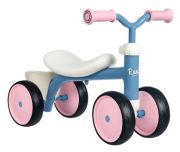
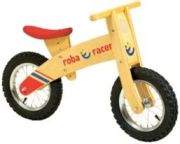
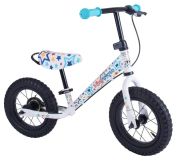
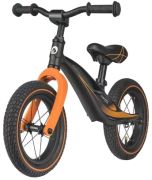
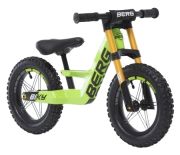

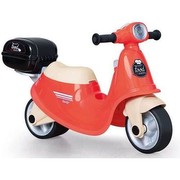


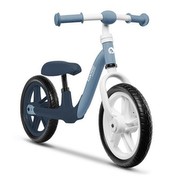
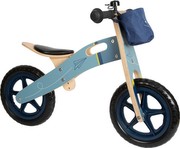
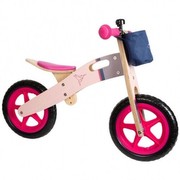

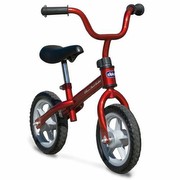



Newly Added Products



Balance Bikes: Consumer tips

Why choose a balance bike?
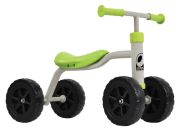
Balance bikes help children practise the skills most important for cycling: balancing while moving, steering, looking ahead and controlling speed. They are commonly used on smooth pavements, in parks, on traffic-free paths and in gardens.
A balance bike can help children learn to:
- Balance and glide with both feet off the ground
- Steer around obstacles and change direction
- Judge speed and stopping distances
- Build leg strength, coordination and spatial awareness
- Gain confidence before progressing to a pedal bike
Supervise children closely, particularly near driveways, roads, car parks, slopes and water. A balance bike is not suitable for use in traffic. In the UK, children can cycle on pavements, but they should be taught to slow down, give pedestrians plenty of space and stop at every road crossing. Choose traffic-free areas for learning and follow the current Highway Code guidance when cycling near roads or shared paths.
Get the fit right
A correctly sized balance bike is safer and more enjoyable than one chosen to “grow into”. Your child should be able to sit on the saddle with both feet flat on the ground and a slight bend in their knees. They need enough clearance to push off, walk the bike and stop comfortably.
Measure your child’s inside leg from the floor to the crotch while wearing the shoes they will ride in. Compare this measurement with the manufacturer’s minimum saddle height, rather than relying only on wheel size or age recommendations.
Look for:
- A low minimum saddle height for easy mounting and stopping
- Adjustable saddle and handlebar height for longer use
- A low step-over frame that is easy to get on and off
- Comfortable grips with flared ends to protect hands
- A steering limiter on very small beginner models, where appropriate
- A lightweight frame that your child can manoeuvre and you can carry
As a guide, the bike should feel easy to lift, turn and control. A lighter model is particularly helpful for younger children, but build quality and fit matter more than meeting a single weight figure.
Frames, wheels and tyres
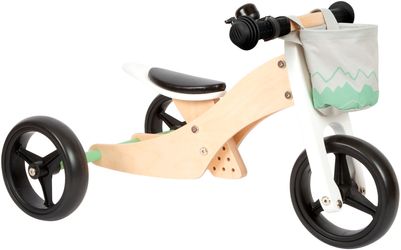
Balance bikes are available in wood, steel, aluminium and lightweight composite materials. Each can be suitable if the bike is well made, stable and correctly sized.
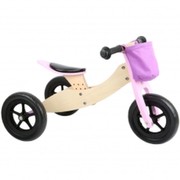
Wooden balance bikes can have a traditional appearance and are often popular for indoor or light garden use, although they may need more protection from prolonged wet weather. Steel frames are usually durable and affordable but can be heavier. Aluminium models are generally light, corrosion-resistant and easy for young children to handle. Composite-frame models can also be very light, but check their build quality and intended age range.
Tyres affect comfort and grip. Pneumatic tyres generally provide the smoothest ride and better cushioning on pavements, gravel and park paths, but they need occasional inflation and can puncture. Foam-filled or solid EVA tyres are lighter and maintenance-free, making them suitable for indoor play and smooth surfaces, although they offer less grip and shock absorption on rough ground.
Do children need a brake?
Young children often use their feet to slow down and stop, and a brake is not essential on every first balance bike. However, many modern balance bikes include a child-sized hand brake, usually a rear brake, to help older or more confident riders begin learning braking control.
A well-designed front brake can also be safe, but it should have a light action, an appropriately sized lever and be used under supervision. For a first balance bike, a rear hand brake is often the simpler option. The key is that your child can reach and operate the lever without losing control of the handlebars.
Avoid treating any feature as automatically necessary or unnecessary. Consider the child’s coordination, where they will ride and whether there are slopes nearby. Teach children to stop with their feet first, then introduce the brake gradually on flat, clear ground.
A stand and bell are optional. A stand can be useful for older children, but younger riders may simply place the bike on the ground. A bell can be helpful on shared paths when used responsibly, but it is not a substitute for slowing down and giving way to pedestrians.
Safety and quality checks
Choose a balance bike supplied with clear instructions and suitable for your child’s age and size. Products sold in Great Britain should meet applicable safety requirements and carry the appropriate conformity marking, such as UKCA or CE where accepted under current UK rules. Toy-style balance bikes may also be designed to relevant EN 71 safety standards; check the manufacturer’s product information rather than assuming that every marking covers the same use.
Before each ride, check that the handlebars, saddle, wheels and fasteners are secure. Keep fingers away from moving wheels and ensure there are no sharp edges, loose parts or exposed bolts. Children should wear well-fitting footwear, and a correctly fitted cycle helmet is strongly recommended for riding outdoors. Knee and elbow pads can provide extra confidence for beginners.
Balance bike buying checklist
- Choose by inside-leg measurement and saddle height, not age alone.
- Your child should be able to sit with both feet flat on the ground.
- Select a lightweight frame that is easy for the child to control.
- Look for adjustable saddle and handlebars.
- Choose pneumatic tyres for comfort on uneven outdoor surfaces, or EVA tyres for low-maintenance use on smooth ground.
- Consider a child-friendly rear hand brake for older or more confident riders.
- Check grips, steering, fasteners and edges for child-safe design.
- Use the bike in safe, traffic-free spaces and supervise young children.