






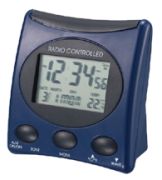

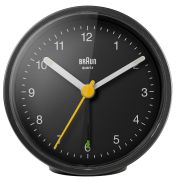

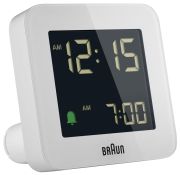

Newly Added Products


Buy alarm clocks cheaply: Consumer tips

There are different types of alarm clocks, and the devices are equipped with various functions. Here we present the most important facts.
Classic Alarm Clocks
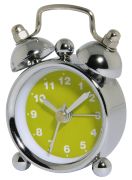
To use an alarm clock, the time must first be set for when the alarm should go off. Depending on the model, the input can be done manually by turning the dial or digitally. When the set time is reached, the device emits a sound. In addition to the classic beep, there are usually other variations to choose from.
Almost every alarm clock is equipped with a snooze button. When the alarm goes off, the button can be pressed, and the sound stops. However, this does not end the alarm; it will go off again in a rhythm of ten minutes. Often, the snooze time can be set individually. This function is suitable for sleepers who do not want to get up abruptly but prefer to doze for a while longer.
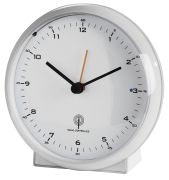
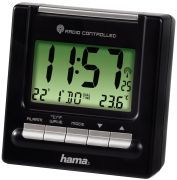
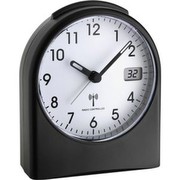
Since the main function of the alarm clock is to prompt the owner to get up at a specific time, precise timekeeping is particularly important. Many devices have integrated radio modules that synchronise the time with a signal from the Federal Institute and update it if necessary.
Radio Alarm Clocks
Radio alarm clocks, on the other hand, play music. They usually also have a CD player or MP3 player port, allowing desired songs to be played. They often also offer a sleep timer function. This allows users to listen to music before going to sleep, and the device automatically turns off after a pre-set time.
Light Alarm Clocks
However, it doesn't necessarily have to be a sound coming from the alarm clock: there are now models that work with light. They have a lamp that gradually gets brighter until the wake-up time is reached. This is intended to simulate a sunrise and wake the sleeper more gently. Some models also play nature sounds, starting very quietly and then getting louder, ensuring a relaxed waking experience.
Alarm Clocks for Hearing and Visually Impaired
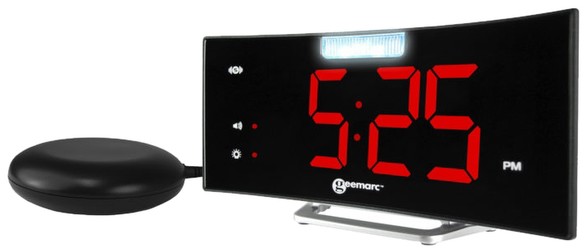
There are also specially designed alarm clocks for people with disabilities. They alert the user through vibration, for example, by placing the device under the pillow, or for the hearing impaired, through successive light pulses.
Sleep Phase Alarm Clocks
So-called sleep phase alarm clocks are based on the owner's biorhythm. The alarm clock registers the physical restlessness of the sleeper. During a light phase, this increases and signals to the alarm clock that it is currently a good time to wake up.
Action Alarm Clocks
As a special feature, there are alarm clocks on the market that require the user to perform an activity. For example, the device starts rolling when the alarm begins, forcing the sleeper to get up to turn it off. Others fall apart into individual pieces and must be reassembled. Furthermore, there are alarm clocks that can be silenced by throwing them against a wall or on the floor. These are made to be robust or soft so that they do not break.