






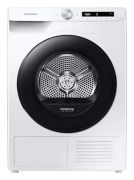


Heat pump dryers: Consumer tips

How does a heat pump dryer work?
A heat pump dryer uses an integrated heat pump that operates significantly more energy-efficiently than conventional condensation or vented dryers. The technology works like that of a refrigerator, but on the reverse principle. The core is an integrated heat pump that directs moist air from the drum through an evaporator, where it cools and the moisture then condenses. The cooled, dry air is then heated again by a condenser and returned to the drum. This cycle allows the heat generated once to be used multiple times, reducing energy consumption by up to 50 percent compared to conventional condenser dryers. The condensed water is either collected in a container that needs to be emptied regularly or drained directly through a drain hose. Heat pump technology operates at lower temperatures than other types of dryers, which is particularly gentle on delicate fabrics and prevents clothes from shrinking. Current heat pump dryers are equipped with intelligent sensors that continuously monitor the moisture content of the laundry and automatically end the drying process as soon as the desired dryness level is reached. This prevents overdrying and is gentle on both the laundry and the wallet. Regular maintenance is therefore crucial for the longevity and efficiency of the device. After each drying cycle, the lint filter should be cleaned, as clogged filters hinder airflow and increase energy consumption. Additionally, heat pump dryers have other filters that need to be cleaned monthly or quarterly, depending on the model. The condensate container should be emptied after each use if the device is not permanently connected.
What advantages do heat pump dryers offer compared to other types of dryers?
The biggest advantage of heat pump dryers lies in their high energy efficiency. Conventional condensation dryers only achieve energy efficiency classes of B or C. Heat pump dryers regularly achieve classes A+++ or A++ due to their economical technology. This leads to significantly lower electricity costs, which can offset the higher purchase price after just a few years. Another important advantage is the gentle treatment of fabrics due to the lower drying temperatures. Conventional dryers operate at temperatures of 100 degrees Celsius and above, while heat pump dryers manage with a maximum of 60 degrees Celsius. Shrinking, discolouration, or damage to fabrics is thus almost a thing of the past. Heat pump dryers are very flexible in their placement, as they do not require a venting duct like vented dryers. They can be set up practically anywhere there is a power outlet. The closed design also means that less lint enters the room and the humidity in the installation room is not increased. The models also offer special programmes for different types of fabrics and feature options such as drum lighting, crease protection, or a delayed start. Smart devices with smartphone control are also on the rise here.
What capacity do I need for my household?
The right drum capacity mainly depends on the size of the household and washing habits. For single households or couples without children, devices with a capacity of 7 to 8 kilograms are usually completely sufficient. The capacity is enough for a normal washing machine load and provides enough space for bed linen or larger laundry items. Families with one to two children should opt for models with 8 to 9 kilograms of capacity, as larger amounts of laundry are regularly generated here. Larger families or households with high laundry volumes are well advised to choose devices with at least 9 kilograms of capacity. It is important to note that the manufacturer's specifications refer to cotton laundry. For synthetic materials or blended fabrics, the drum should be filled less to achieve optimal drying results. A device that is too large is not always the best choice, as it operates inefficiently with low loads and consumes more energy. On the other hand, overloading leads to poorer drying results and more creasing. However, the new heat pump dryers on the market feature a load automation that adjusts the energy and time requirements to the actual load, thus counteracting excessive water and electricity consumption.
What do the different drying programmes mean?
Heat pump dryers offer programmes tailored to different types of fabrics and drying requirements. The standard programme for cotton is suitable for robust natural fibres such as T-shirts, bed linen, or towels and offers various drying levels from "iron damp" to "extra dry". The "easy care" programme operates at reduced temperatures and is perfect for blended fabrics or slightly delicate textiles. For particularly delicate materials such as wool or silk, there are special gentle programmes that operate with very low temperatures and reduced drum power. The outdoor programme is specifically designed for functional clothing and maintains the water-repellent properties of outdoor clothing. Time programmes allow you to set a fixed drying time, which is particularly practical for slightly damp textiles or for refreshing worn clothing. Most devices also have programmes for shirts with reduced creasing or jeans for robust denim fabrics. Premium models even have programmes for sanitising textiles or treating allergens. The programme selection should be based on individual needs and the type of laundry to be dried.
What should you pay attention to regarding energy efficiency?
Energy efficiency is the decisive purchasing aspect for most buyers of heat pump dryers, as energy-efficient devices pay off in the long run despite the higher initial costs. The EU energy label provides information on annual electricity consumption and the efficiency class. Heat pump dryers of class A+++ consume about 150 to 180 kilowatt-hours per year, while A++ devices require between 190 and 230 kWh. In addition to the pure energy efficiency class, one must also pay attention to the condensation efficiency class, which indicates how well the device removes moisture from the air. A high condensation efficiency prevents residual moisture from being released into the room. Additional energy-saving features such as automatic shut-off, load detection, or an eco mode further reduce consumption. When comparing different models, one should always look at the absolute consumption values in kWh per year, as these are more realistic than the often advertised consumption values per programme.
Why does drying with a heat pump dryer take longer?
Heat pump dryers have longer drying times compared to conventional condensation or vented dryers. A conventional dryer takes about 60 to 90 minutes to completely dry a load of cotton laundry - a heat pump dryer takes between 120 and 180 minutes for the same process. The longer duration results from the lower working temperature of the heat pump technology, which, while more energy-efficient, requires more time to extract moisture. However, the lower temperatures of a maximum of 60 degrees Celsius compared to up to 100 degrees in conventional devices are much gentler on the fabrics and reduce the risk of shrinking or damage to the garments. Available heat pump dryers compensate for the longer running time with intelligent sensor technology that optimises the drying process and automatically ends it as soon as the desired dryness level is reached. Special quick programmes can reduce the drying time by 20 to 30 percent, albeit with slightly reduced energy efficiency.
How loud are heat pump dryers in operation?
Most heat pump dryers operate at a volume between 62 and 67 decibels, which is about the volume of a normal conversation. They are generally quieter than conventional condensation dryers, which often reach 68 to 72 decibels. The lower noise level results from the more efficient heat pump technology and the lower operating temperatures, which require less noisy fan operation. Particularly quiet models even reach values below 65 decibels and are therefore suitable for operation in living areas or during night-time. However, the noise development also depends on the selected programme – quick programmes naturally operate a bit louder than standard programmes. When placed in basements or separate utility rooms, the volume is less of a concern, while it can be crucial in kitchens or bathrooms of apartments.
What smart features do modern heat pump dryers offer?
Digitalisation has also reached heat pump dryers, and many new heat pump dryers offer several intelligent functions that significantly enhance the comfort and user-friendliness of the device. With a smartphone and the appropriate app, programmes can be started via Wi-Fi or the drying progress can be monitored from afar. Push notifications inform when the drying process is complete or when the condensate container needs to be emptied. These smart features are particularly interesting for tech-savvy users who value maximum comfort and control, but they also increase the purchase price and complexity of the device.
What should be considered when setting up?
Heat pump dryers require a well-ventilated installation location with sufficient space around the device for optimal function. A minimum distance of five centimetres from walls and other devices should be maintained to ensure adequate air circulation. A room temperature between 5 and 35 degrees Celsius is optimal, as extreme temperatures can impair efficiency. Unlike vented dryers, heat pump dryers do not require a venting hose but can be permanently connected to the wastewater system if needed.
FAQ
What is the advantage of a washer dryer?
A washer dryer is a combination device that unites a washing machine and dryer in one unit. It saves space and allows washing and drying without transferring the laundry.
How long does the washing and drying process take?
The washing time is between 1.5 to 2 hours, and drying can take 1 to 3 hours depending on the programme and load. A complete wash and dry cycle therefore takes a total of 3 to 5 hours.
What advantages does a washer dryer offer?
Washer dryers are particularly space-saving and ideal for smaller apartments. They offer convenience as no separate dryer load is necessary.
Can I dry any laundry in a washer dryer?
Delicate fabrics such as wool or silk should not necessarily be dried in a washer dryer. It is best to follow the care instructions and choose air drying if in doubt.
Are there also disadvantages to washer dryers?
Washer dryers have a lower drum capacity for drying than for washing and consume more electricity than separate devices. Additionally, the drying process takes comparatively longer.
Are washer dryers more expensive than separate devices?
They are more expensive to purchase than simple washing machines but cheaper than two separate devices. The savings are mainly in space requirements and convenience.
