














Buy car power amplifier cheaply: Consumer tips

Broadband amplifiers, on the other hand, improve speaker sound and cover both small and large frequency ranges. There are also devices where the preamplifier and power amplifier are combined in one unit, but separate units still achieve better sound results.
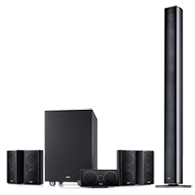
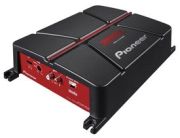
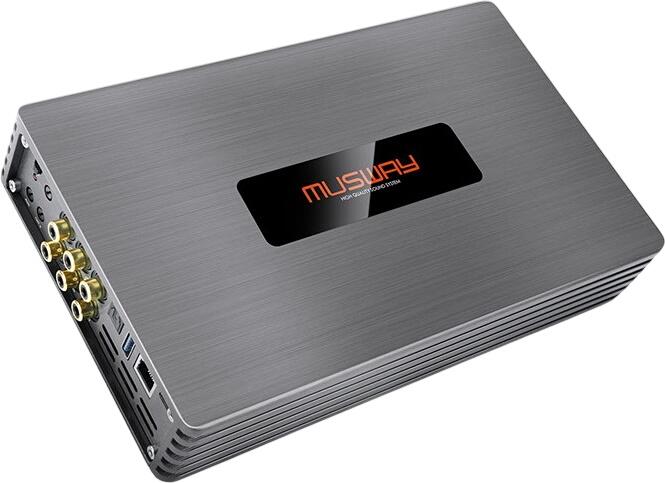
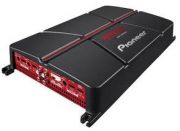
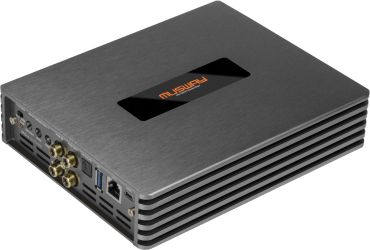
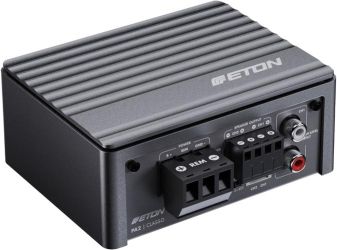
In addition, power amplifiers can be distinguished more precisely based on the number of integrated channels. A mono power amplifier is only suitable for one subwoofer connection, whereas 2-channel systems also allow for the connection of speakers. With amplifiers that have multiple channels, the volume can also be increased beyond what the car radio provides. In addition to 2-channel amplifiers, there are also 4-, 5-, and multi-channel amplifiers. These are characterised by their flexible usability. 4-channel amplifiers can be used in 2-, 3-, or 4-channel operation. This means that, for example, up to two pairs of speakers or one pair of speakers and one subwoofer can be connected in bridge mode. The 5-channel amplifiers can be described as all-rounders. They can even connect up to two pairs of speakers and one subwoofer. The advantage of 5-channel amplifiers lies in their universal usability and the fact that they are usually sufficient for a more complex sound system. Additionally, using just one amplifier saves space. For multimedia applications, multi-channel amplifiers with six or more channels are particularly suitable. These can, for example, operate Dolby Surround systems. As with 4- and 5-channel systems, the flexibility in terms of usability and the space saved are particularly advantageous.
What principles do power amplifiers operate on?
The operating modes of power amplifiers are divided into the so-called line operation and a digital operating mode. In analog line operation, A, B, and AB operation can be distinguished. Generally, they have a relatively low efficiency but good sound quality. In the field of car hi-fi, AB systems are mostly used, as this type allows for simple calculation of the power supply. The digitised C, D, or E operation, on the other hand, achieves a very high efficiency. The trend in digital power amplifiers is towards D systems, which offer high efficiency, small heat sinks, long battery life, and complete digitalisation. The disadvantage compared to AB systems is the higher distortion factor and occasional electromagnetic interference.
What should be considered when buying a power amplifier?
When buying a power amplifier, wattage is not the only factor that counts. On the contrary, aspects such as a linear frequency response between 16 and 16,000 Hertz, the slew rate value (speed of the output signal), or the ratio of RMS power (effective power) to music power (wattage at peak impulses) should be given much more consideration. A particularly meaningful indicator of the power of the amplifier is the RMS value (Root Mean Square), which should provide at least as much power as the subwoofer, ideally more. The damping factor of the amplifier should also roughly correspond to that of the subwoofer. Due to increased flexibility and stronger performance, it is advisable to purchase at least a 2-channel system. Furthermore, the efficiency of the amplifier must be compatible with the design of the connected speaker as well as its load impedance. A clipping protection circuit, which disconnects the connection between the amplifier and speaker in the event of overdriving, is advantageous. If a 2- or 4-channel system is to be used to bridge a subwoofer, it should be ensured that the amplifier is stable at no less than two ohms in 2- or 3-channel operation and that the subwoofer has at least four ohms impedance.