








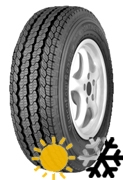
Car all-season tyres: Consumer tips
All-season tyres and what technology is behind them?
All-season tyres are designed as a technical compromise between summer and winter tyres, combining features intended to provide usable performance across a broader range of weather conditions. Their rubber compounds are generally formulated to remain more flexible at lower temperatures than typical summer tyres, while still maintaining stability in warmer conditions. The tread pattern likewise combines elements aimed at dry and wet-road stability with features that can improve traction in colder or snowy conditions, such as additional sipes and grooves. Many all-season tyres also use advanced compound and tread technologies to balance wet grip, temperature adaptability and year-round usability. However, even with these design features, all-season tyres remain a compromise: they are intended to offer versatility rather than to match the best summer tyres in hot conditions or the best winter tyres in severe snow and ice. In the UK, this makes them a practical option for many drivers, particularly where winters are relatively moderate, but suitability still depends on the specific tyre model and the conditions in which the vehicle is used.
What advantages and disadvantages do all-season tyres offer?
The main advantage of all-season tyres is convenience. For many UK drivers, they remove the need for a twice-yearly tyre change, additional storage space and the effort of arranging seasonal fitting appointments. This can save both time and money, particularly for motorists who drive mainly in typical UK weather conditions and want a single year-round solution. All-season tyres can also offer reassurance during sudden changes in weather, as they are intended to cope more flexibly with mixed conditions than standard summer tyres. Modern all-season tyres have improved considerably and, depending on the model, can perform well across a broad range of conditions. However, they still involve compromises. In warmer weather, they may not match the braking, handling and wear performance of the best summer tyres, while in severe winter conditions they generally do not deliver the same traction and control as dedicated winter tyres. Their longevity and efficiency can also vary depending on driving style, mileage and the specific tyre model. Overall, all-season tyres are often a practical choice in the UK, but they are usually best suited to drivers who encounter relatively moderate winters rather than prolonged snow or extreme temperatures.
For which drivers are all-season tyres suitable?
All-season tyres are often a good fit for drivers with relatively low annual mileage, especially where convenience and avoiding seasonal tyre changes matter more than maximising performance in specific conditions. They can work well for commuters in parts of the UK that see only occasional snow and for urban drivers who value a simple year-round solution. However, suitability depends less on a fixed mileage threshold than on the actual driving profile, local weather and road conditions. They may be less suitable for drivers who cover high motorway mileage, regularly drive at sustained higher speeds, or travel frequently in more demanding winter conditions. In areas with more severe weather, including upland or snow-prone regions, dedicated winter tyres may still be the better choice during the colder months. Likewise, drivers who prioritise sharper handling or maximum performance may prefer seasonal specialist tyres. In practice, the best choice should be based on an honest assessment of where, how and in what conditions the vehicle is normally driven.
Do all-season tyres meet legal requirements?
In the UK, all-season tyres do not need to bear the Alpine symbol (snowflake in a three-peaked mountain, 3PMSF) to be legal for general road use, because there is no general legal requirement to fit winter tyres in wintry conditions. Tyres must instead meet the ordinary roadworthiness rules, including the legal minimum tread depth and freedom from defects. However, all-season tyres with the Alpine/3PMSF symbol have passed a standardised snow-traction test and are generally considered more suitable for snow use than tyres marked only M+S (mud and snow). The M+S marking alone does not certify that a tyre has passed the same snow-performance test. In the UK, the Alpine symbol is therefore best understood as an indicator of tested snow capability rather than a legal prerequisite or a guarantee of full winter performance. Drivers should also be aware that winter tyre rules differ across Europe, so local requirements should be checked before travelling abroad.
Are all-season tyres economically worthwhile?
The obvious savings with all-season tyres come from the elimination of change costs of about 40-80 pounds per season and storage costs of 30-60 pounds annually. With an average tyre lifespan of 6 years, the purchase is worthwhile, and savings can be made compared to regular summer and winter tyres. Additionally, the costs for workshops and the time spent on appointments are eliminated. However, all-season tyres are approximately 10-20 percent more expensive to purchase than comparable summer tyres and wear out faster with year-round use. The increased rolling resistance can lead to 3-5 percent higher fuel consumption, which means about 60-100 pounds in additional costs for 15,000 kilometres annually. For high-mileage drivers over 20,000 kilometres annually, these additional costs can add up to 100-150 pounds and negate the savings.
What should be considered when buying all-season tyres?
In the UK, the Alpine/3PMSF symbol can be a useful baseline when choosing all-season tyres, as it indicates that the tyre has passed a standardised snow-traction test. However, because there is no general winter tyre requirement in the UK, it should be seen as a performance indicator rather than a legal necessity. Independent comparative tests by reputable motoring organisations and specialist publications are particularly useful when assessing all-season tyres, especially for their wet-weather, winter and summer performance, as different models involve different compromises. Premium brands often aim for a more balanced overall performance, but this usually comes at a higher price. The UK tyre label also provides helpful information on fuel efficiency, wet grip and external rolling noise, so strong wet-grip ratings are especially relevant for year-round use in typical UK conditions. Buyers should ensure that the tyre size, load index and speed rating are suitable for the vehicle and that fitting is carried out professionally in accordance with the tyre manufacturer’s instructions. As with any tyre, overall performance depends on the specific model, and the Alpine symbol alone does not guarantee equal capability in all winter conditions.
Who are all-season tyres suitable for?
They are ideal for drivers living in regions with mild winters and not expecting extreme weather conditions. They are also a practical solution for infrequent drivers and vehicles with low annual mileage.
How do all-season tyres differ from summer and winter tyres?
All-season tyres combine characteristics of summer and winter tyres, such as a rubber compound that works at different temperatures and a tread designed for wet conditions and light snow driving.
How long do all-season tyres last?
The lifespan depends on driving style and road conditions, but typically ranges from 3 to 5 years. Regular checks of tread and condition are important.
Can I drive with all-season tyres in heavy snow?
In heavy snowfall or ice, all-season tyres usually do not provide the same safety as proper winter tyres. In such cases, specialised winter tyres are recommended.
Do all-season tyres need to be changed more often than summer or winter tyres?
Not necessarily. Since they are used year-round, they wear continuously and should be regularly checked for tread and condition. A second set of tyres is not necessary for all-season tyres.