







Buy speaker systems cheaply: Consumer tips

In principle, speaker systems can be distinguished as active and passive. Active speaker systems have an integrated amplifier, while passive speaker systems must be connected to a power amplifier.
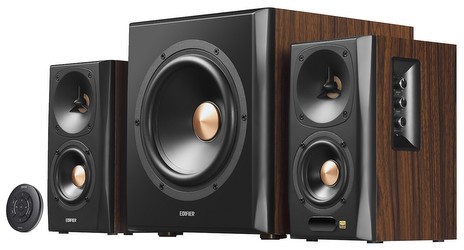
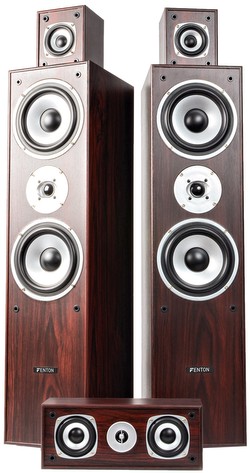
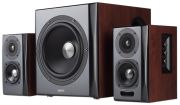
Additionally, there are various speaker system component systems. Since not every speaker system can cover different frequencies equally well, multiple chassis are installed in one enclosure. In a 1-way system, the aim is to cover the entire frequency range with one chassis. However, even in high-quality 1-way systems, it is difficult to optimally reproduce high tones due to the construction. 2-way and 3-way systems are more common. 2-way systems combine a tweeter (speaker system diaphragm that reproduces the highest frequencies) and a mid-bass driver. They are often used in compact and bookshelf speakers and are usually passive. 2.5-way systems are also possible, where an additional bass driver is integrated. In a 3-way system, the frequency ranges are assigned to a bass, mid, and tweeter. This system is often used in floor-standing speakers. A construction with four or more speaker system diaphragms is rather rare, as it is technically very demanding and also the costs are very high.
What should I consider when buying?
First, you should ask yourself what purpose the speaker systems are intended for. Do you mainly want to listen to music with them? Or are the speaker systems intended as home cinema components? Additionally, factors such as sound quality, efficiency, frequency range, and impedance are crucial for the quality of the speaker system when purchasing. Before deciding on specific speaker systems, you should subject them to a listening test to get an impression of the sound. It is important to note that a similar input source and a similar sound environment as used at home should be used for the test. The efficiency indicates the ratio of input electrical power to output volume and is measured in decibels. The higher the efficiency, the louder the speakers sound. Efficiency is particularly important when a weak amplifier is used as the input source. The frequency range is indicated by the lower and upper cutoff frequencies. The frequencies specified in this range can be reproduced by a speaker system. Since the human ear can only perceive frequencies in the range of 20 to 20,000 Hertz, it is sufficient for speaker systems to cover this range.
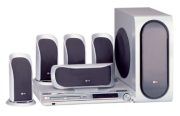
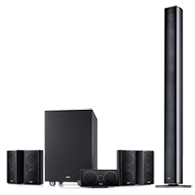
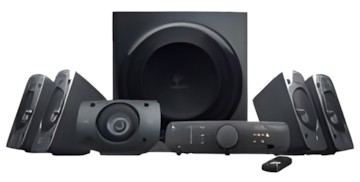
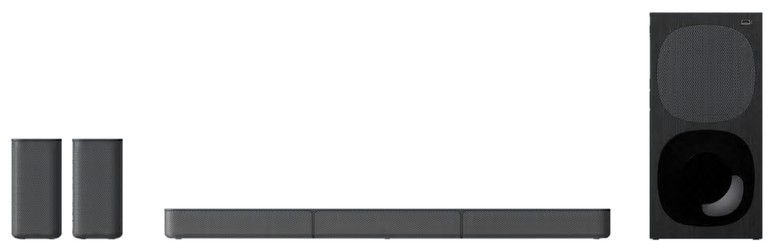
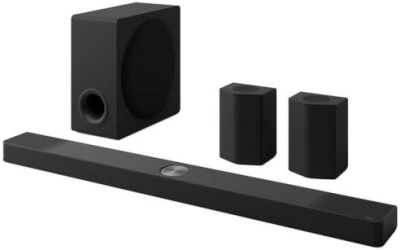
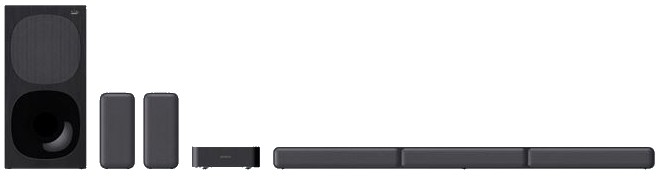
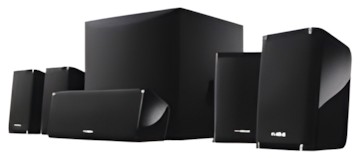
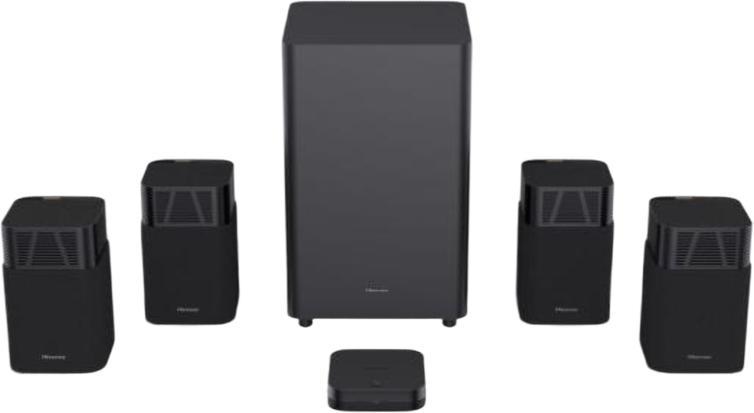
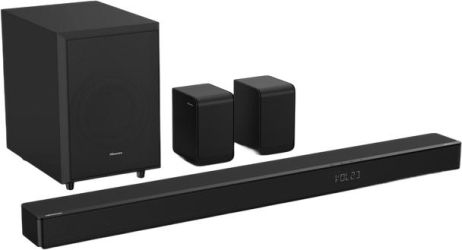
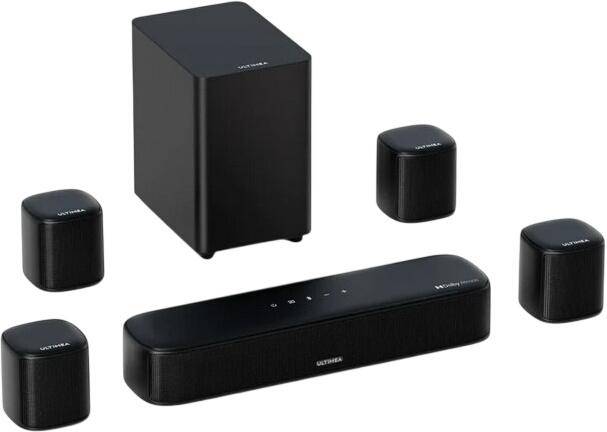
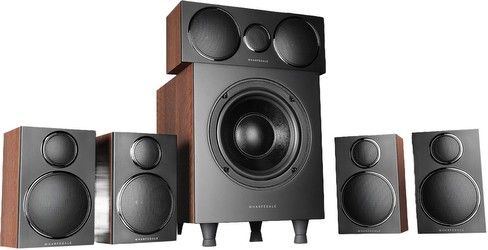
Impedance refers to the electrical resistance of the speakers against the amplifier and is measured in ohms. A value between four and eight ohms is normal. It is important that the speakers and amplifier have the same value or that the speakers have a higher value; otherwise, the amplifier could be damaged. The quality of the sound is also significantly influenced by the cables used. If savings are made here, it can lead to the speaker system not being fully utilised. Those who want to complete their home cinema with speaker systems should consider a speaker system with surround sound. 5.1 systems are the most common. They consist of a total of six speakers: two front speaker systems, two surround speaker systems, one centre speaker system (usually a 2- or 2.5-way system that reproduces the audio spectrum in which the human voice is active), and one subwoofer (speaker system specifically for bass). More exotic are 6.1 or 7.1 systems. In a 6.1 system, there is additionally a "back centre", while a 7.1 system has two additional "back surrounds". It is important for such surround systems that the individual components come from a uniform model series.