










Freezers: Consumer Tips

Stand-alone or integrated freezers
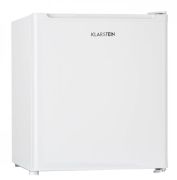
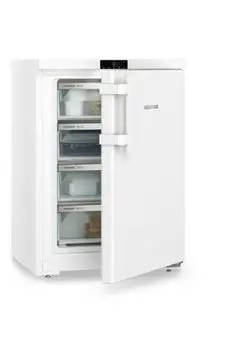
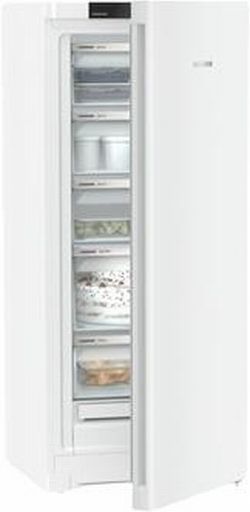
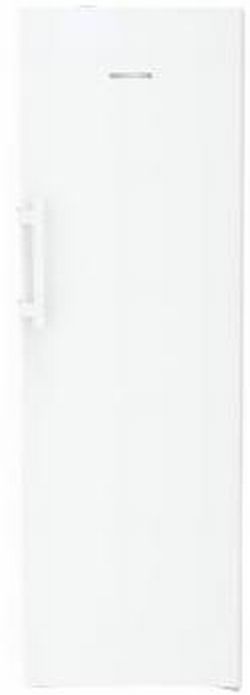
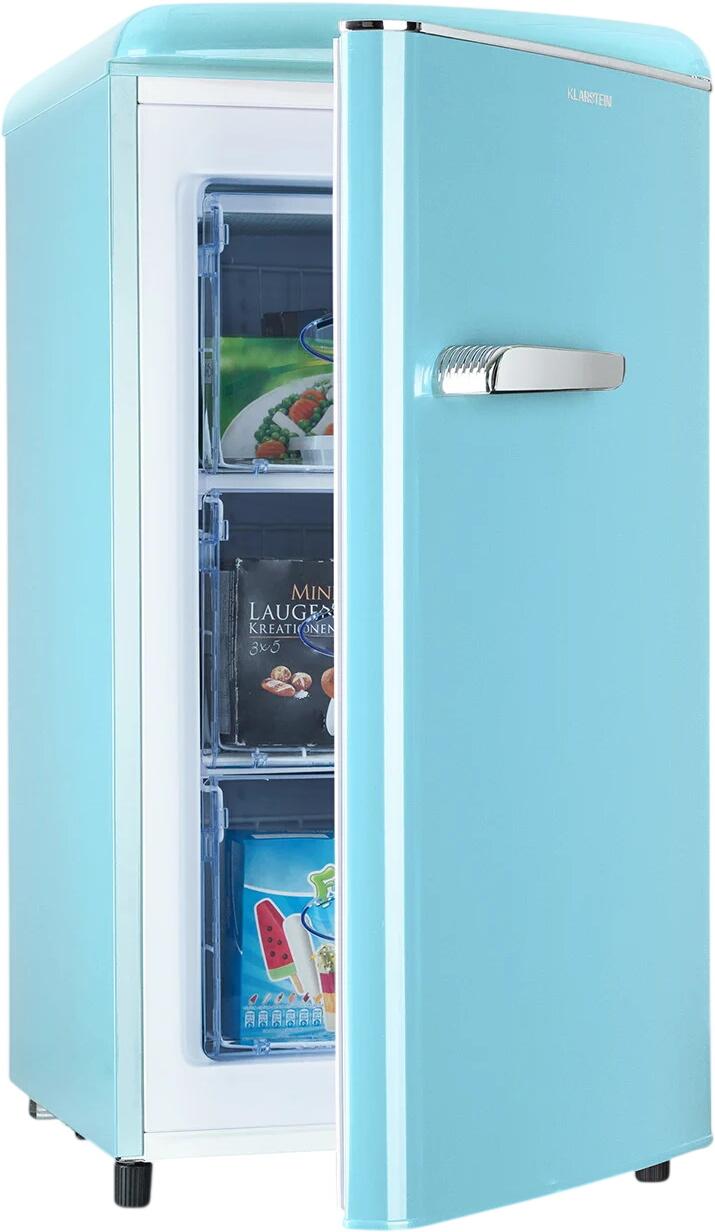
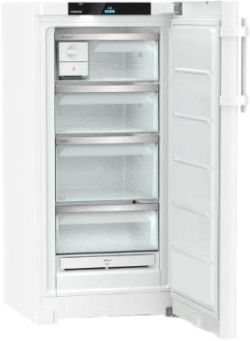
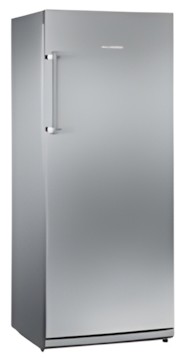
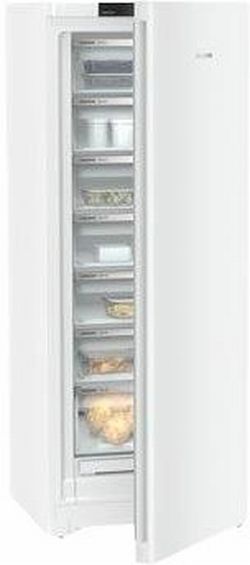
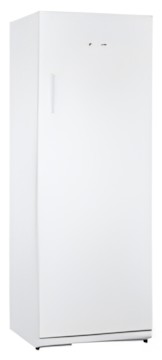
A stand-alone unit is characterised by its flexibility in placement and can be set up not only in the kitchen but also in other rooms such as basements, garages, storage rooms, or pantries. The range is correspondingly diverse: it ranges from freezer boxes or mini freezers with a height of about 50-65 cm and a usable capacity of about 70 litres for small needs to freezers that are 200 cm high, offering space for 400 litres. A stand-alone freezer is usually a more cost-effective alternative to a comparable built-in unit and generally has a better energy efficiency factor. This is due to the fact that an integrated freezer in the kitchen, despite requiring the same space, offers less storage space. When planning integrated appliances, several centimetres must be left free in the furniture cabinet for ventilation.
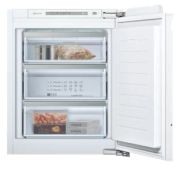
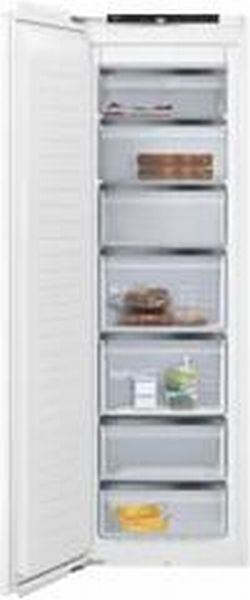
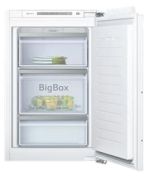
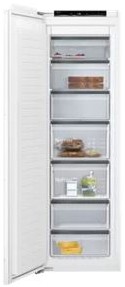
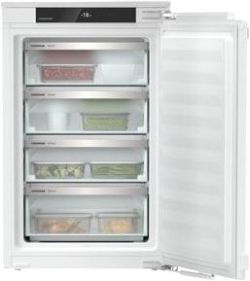
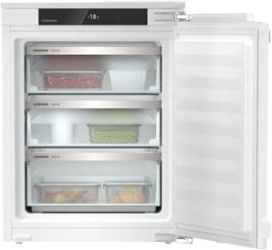
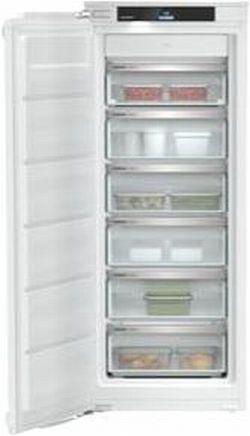
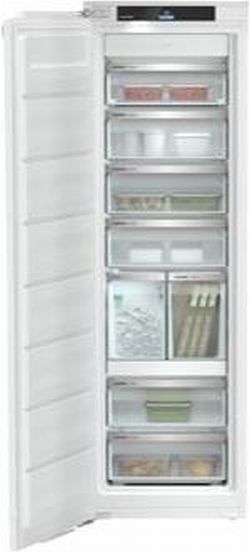
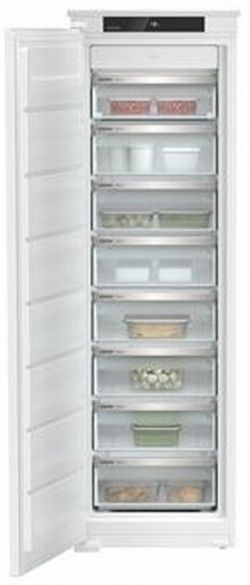
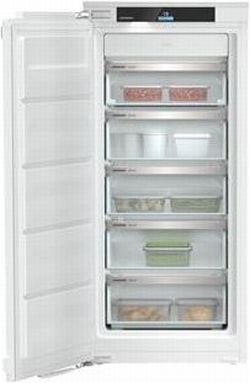
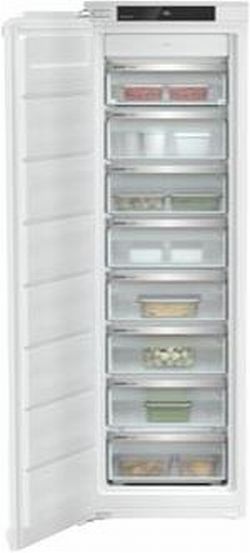
When installing an integrated freezer, it is advisable in most cases to combine it with a separate refrigerator in a built-in design. Both stacked and side-by-side installed variants are possible. The advantage of this approach lies in the adaptability of the cooling and freezing zones. By default, the built-in freezer is designed for 60 cm wide and deep kitchen cabinets, allowing it to be easily integrated into various kitchen designs. The range of appliance heights (80–190 cm) and freezing capacities (60–400 litres) is large. Integrated freezers are more expensive than stand-alone units.
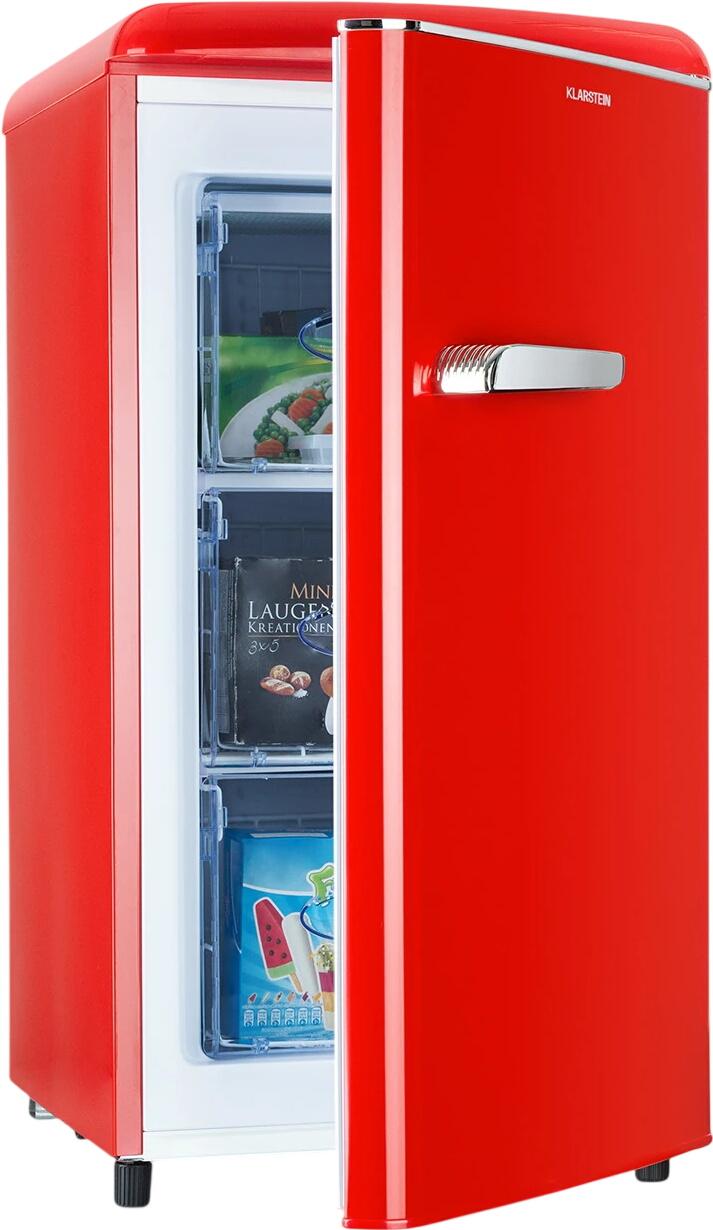
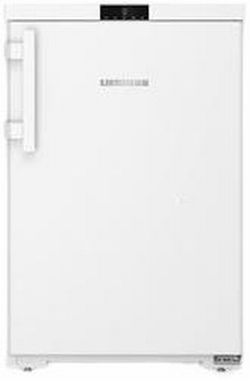
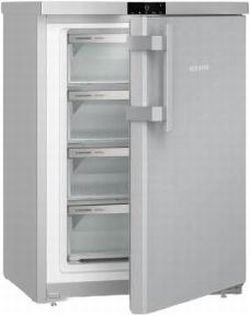
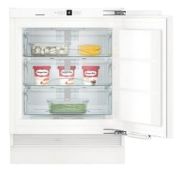
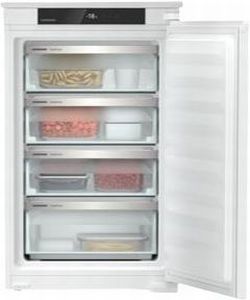
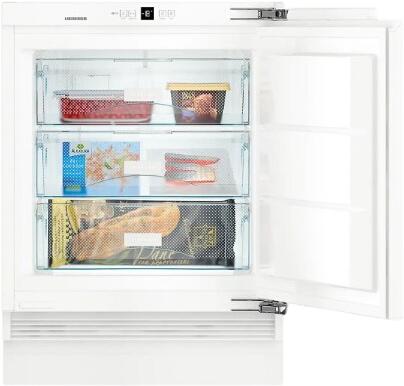
A built-under freezer is equipped with a removable cover and has a width of about 60 cm and a height of about 82–85 cm. This makes it suitable for most conventional kitchen niches and worktops. Typically, the front remains uncovered, but there is a cut-out for mounting a continuous plinth. Both stand-alone and built-in appliances are available as built-under variants.
Functions
Regardless of the design, it applies to freezers that both the features, such as shelves in the door area and LED lighting, as well as the range of functions, such as temperature settings and various freezing modes, increase with the height of the appliance.
- The fast freezing function is designed to allow larger quantities of food to be frozen in a relatively short time. The name of this effect varies by manufacturer and can be referred to as "SuperFreeze", "SuperFrost", or "Super-Freezing". The manual activation or deactivation of this function is done via a corresponding button. Typically, an automatic shut-off is also integrated. When activated, power consumption may increase and noise levels may become more intense.
- The NoFrost system is characterised by the fact that ice formation and defrosting of water are not required. An integrated circulation system, powered by a fan, transports the moist air out of the interior. However, it should be noted that NoFrost devices are more expensive to purchase and operate, and additionally have a higher noise level due to the built-in fan.
- The LowFrost technology leads to reduced ice formation and is associated with a significantly less frequent need for defrosting, provided an ice layer of 3-5 mm occurs. Furthermore, specially routed cooling lines or particularly smooth interior walls, determined by the respective manufacturer, contribute to a more even temperature distribution.
- Door alarm and temperature alarm function: Typically, both alarm functions, i.e. both a door alarm and a temperature alarm, are integrated. The door alarm triggers an alarm signal if the appliance door remains open for too long. The temperature alarm, on the other hand, is activated when the temperature rises unusually. Reasons for this can be warm room air or the heating of food in the appliance. Other causes can include a power failure or defects in the appliance.
Usable capacity: How big should it be?
The usable capacity of a cooling and freezing appliance, which is indicated in litres, provides information about the amount of food that can fit inside. It should be noted that the optimal usable capacity depends not only on the size of the household but particularly on the lifestyle. For example, a couple who has their own fruit and vegetable garden may need more space in the freezer than a family of four who wants to store their weekly large purchases. As a guideline, about 30 to 50 litres per person can be assumed for small supplies. Those who always want to have a lot in stock should expect a need of about 100-130 litres per person. Freezers are available in various sizes, with usable capacities ranging from 30 to 400 litres. Only chest freezers offer even more space, which can hold about 80 to 550 litres depending on the model. The third option, the fridge-freezer combination, has a relatively large freezing area and offers space for 35 to 270 litres of food.
Freezing capacity
If you frequently freeze fresh food, it is advisable to purchase a model with a high freezing capacity. This value indicates how many kilograms of fresh produce can be frozen to the core within 24 hours. To fully utilise the freezing capacity and freeze larger quantities of food, it is necessary to activate the fast freezing function, ideally about 24 hours before freezing and then keep it running for another 24 hours.
Energy efficiency & power consumption
When purchasing a freezer, we recommend an economical, energy-efficient model with low power consumption. The new energy label helps with orientation. The energy classes A+++ to D have not been valid since 2021. The new classification ranges from class A, which represents the highest energy efficiency, to class G, which indicates the lowest energy efficiency. The new system, which offers greater clarity and aims to make it easier for users to find efficient devices, is based on changed measurement methods. As a result, many freezers have been assigned to a significantly lower energy efficiency class. Models that were classified as energy efficiency class A+++ before the new regulation came into effect are now classified in the energy efficiency classes D and E and no longer meet the requirements for economical energy consumption. Currently, energy-efficient freezers are offered in classes A to C, with class A still encompassing the majority of models.
Noise level
The energy label provides information about the operating noise level and the resulting air sound emission class (A to D). Commercial freezers can have values of 60 dB and more, whereas household appliances are mostly found in classes B and C, making them significantly quieter.
