






Bread makers: Consumer tips
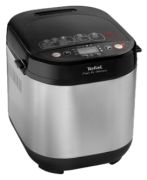
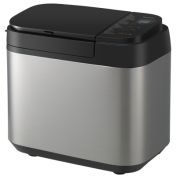
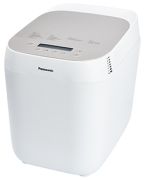
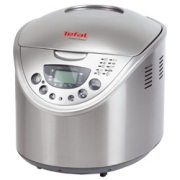
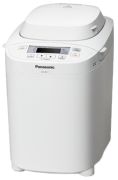
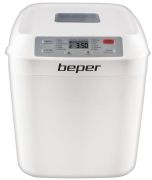
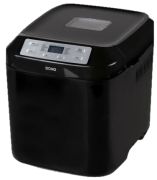
A simple bread maker has a baking pan that also serves as a mixing bowl, a kneading hook, and bakes bread. The ingredients are simply added, and the corresponding button is pressed. But it can bake more than just bread. Depending on the model, it can bake, cook, preserve, steam, ferment, stir, knead, and even make yoghurt, ice cream, or have a built-in scale - all of this is possible with the bread maker. The bread maker takes care of all the preparation steps until the finished bread, dough, or cake thanks to intelligent programming and advanced technology.
Is it worth the investment?
Baking bread by hand is quite laborious and seems like a complex science, especially for beginners, which is hardly manageable. Prior knowledge, experience with kneading times, dough fermentation, temperatures, and patience are required. For those who want to bake themselves or do so for health reasons and prefer it to be simple, quick, and clean, and who want to provide themselves with bread and pastries without much effort, a bread maker is ideal. Once someone finds joy in baking, they can get much more out of their bread maker. Of course, it only makes sense to invest in a bread maker if it is used regularly. If that is the case, a lot of money can be saved. The cost of the ingredients is in your own hands. A bought loaf of bread costs about three times as much as a homemade one. Having fresh bread at the push of a button is a strong argument. You are also not bound by store opening hours or holidays.
Size of the baking pan and viewing window
The devices start at 500 grams and go up to a maximum of 1800 grams. You have the choice between baking small loaves or large loaves. However, seeds or nuts also count towards the weight, so the total weight can quickly add up. With some machines, you have flexibility, as you can choose between different bread sizes, for example, M to XL or 750 grams and 1000 grams. Whether long, square, oval, or upright will, of course, depend on the shape of the bread in the end. Everyone has their own preferences. Generally, this is not so crucial, as bread is usually always sliced, and the dough can also be baked in a different shape in the oven. What is important is that the baking pan has a non-stick coating (Teflon or ceramic). The baking pan must not be damaged.
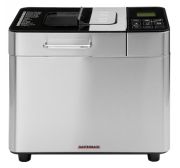
What is an important criterion for many is the viewing window, to observe the fermentation and baking process. This is usually done, whether with or without a viewing window, to feel the dough to see if it needs a bit more liquid. To later add raisins or nuts or to check the baking state. The desire for a crispy bread crust can be an argument against a viewing window. Here, a heat-reflecting inner cover can ensure that the heat is distributed evenly and no heat is lost through a viewing window. Additionally, there are various browning levels to determine the degree of crispiness.
Kneading hook
Due to the kneading and baking in the baking pan, breads from bread makers always have one or two holes in the bottom from the impressions of the kneading hooks. To this day, there is no bread maker that completely avoids kneading hook holes. Newer models almost all have a very narrow kneading hook that does not leave large craters. The newer models almost all have a very thin kneading hook in various shapes that does not leave large craters. Additionally, they are non-stick coated. The different shapes of the kneading hooks are suitable depending on the application and the desired end result of the dough being processed. What is most sensible for each model has been determined by the manufacturer, as well as the choice of whether the machine is equipped with one or two mixing hooks. This, of course, depends on the size, shape, and type of dough.
What costs can I expect?
The good news: All bread makers, whether cheap or expensive, can bake bread. The differences lie in quality, design, size, performance, technology, programme selection, and additional functions. In addition to the purchase costs, there are also operating costs. The power consumption varies between 500 watts and 1500 watts, depending on the model. But does more power also mean more power consumption? It is difficult to calculate the exact electricity costs for the entire baking process. Additionally, it must be distinguished how long the baking programme lasts. Depending on the programme sequence, amount of bread, and degree of browning, different values arise here. However, as a rule of thumb, it can be said that the power consumption of bread makers is about 60 percent lower compared to the oven.